As with the
Werner Herzog collections' coverage, it's time to start bundling up these
Ingmar Bergman posts, because this
Criterion box is literally massive. And I think a great way to do that is to start off with Criterion/ Eclipse's Early Bergman DVD set from 2007. For one, it's just a neat little grouping of films that make sense to be covered together. But it also includes an example of something else I'm very interested in going over here: Bergman films
not included in Criterion's Ingmar Bergman's Cinema collection. I just heard a famous filmmaker on a generally extremely knowledgeable movie podcast, refer to the set as "every Bergman film," so besides worming my way through the ins and outs of every single one of these transfers, I'd also really like to raise awareness of all the Bergman films still
M.I.A. in HD, or even DVD.
Update 4/28/19 - 2/21/22: Criterion's set is wonderful, but happily it isn't the end of the story. The British Film Industry has given us more Bergman debuts on blu-ray with their recent box set,
Ingmar Bergman Volume 1. It includes eight of his early films, including all five of the films covered here, plus three more that we'll be looking at in my next post.
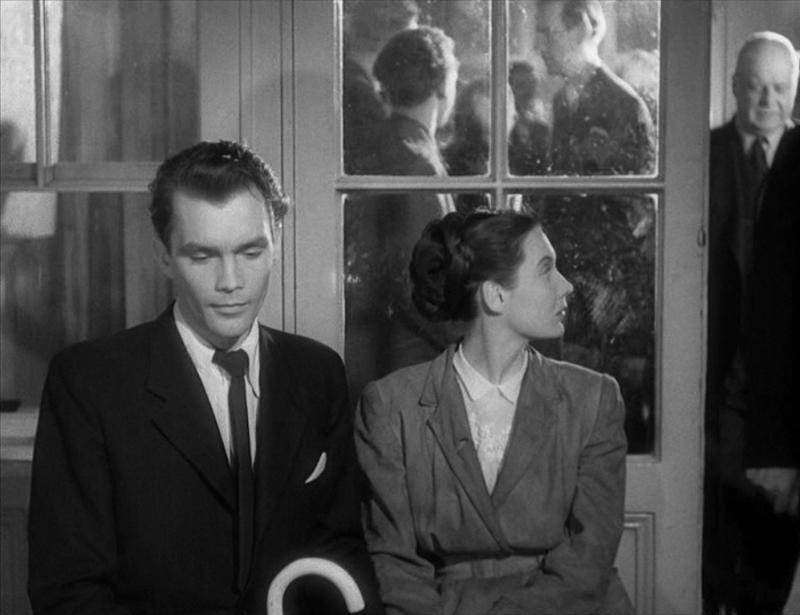
To be fair, you can guess why this first film might've been left out of Criterion's box. 1944's
Torment, a.k.a.
Frenzy or
Hets, is Ingmar Bergman's first produced screenplay, but he didn't direct it. Now, I'd argue that Bergman's talents as a writer are at least as important to his works becoming masterpieces as his direction, probably moreso. But okay, they're sticking with films he directed for their set. Makes some sense; they're narrowly defining what constitutes "Ingmar Bergman's Cinema." Still, it's odd considering Criterion already licensed this film for DVD. Like, it's obvious the only reason
Face To Face is absent from their set, for example, is that Olive Films beat them to the US rights. But this is the only Bergman film already inducted into the Criterion catalog that didn't make the box.
I'm a lot less annoyed at them letting it slip through their fingers, though, now that the BFI has put it out on blu in the UK.
After all, it's certainly not undeserving. The tense drama is more gripping than most of the other films in this collection. Directed by
Alf Sjöberg, the direction does feel a bit more static and boxy, more akin to other films of its period than Bergman's dynamism. But some shots produce a real noir flair, and more importantly the story and the characters are certainly there.
Stig Järrel, who'd go on to play Satan himself in Bergman's
The Devil's Eye, plays a headmaster nicknamed Caligula who's all to happy to live up to the moniker. He delights in terrorizing his students in the classroom, but things come to a head when a twisted sort of love triangle develops between him, one of his students and a young woman who works in a campus shop. It all becomes dangerous to the point that this film shifts from drama to thriller.
 |
UK 2004 Tartan DVD first; US 2007 Criterion DVD second;
UK 2021 BFI BD third. |
Criterion may've given all these films their US DVD debuts with their 2007 Eclipse set, but Tartan had already issued them in the UK on region free discs back in 2003 and 2004. So those were the editions I originally acquired, and as you can see, there isn't a world of difference between the US and UK DVDs. They seem to be using the same
basic, fullscreen transfers with indistinguishable levels of detail, brightness and contrast. But they're not strictly identical. The aspect ratios are just slightly different - Tartan is 1.34:1 and Criterion is 1.33:1 - but Tartan actually displays slightly extra picture information around all four sides. The BFI, meanwhile, was restored in Sweden with a fresh 2k scan of the interpositive - the same set of restorations used for the Criterion box. But this is the first time we get to see it for Torment, and as you'd expect, it looks terrific. Framed now at 1.37:1, the blu reveals more along all four sides, and looks much crisper in HD, with a strong encode of very clearly captured grain. All three discs include simple, but happily clean mono audio tracks (in LPCM on the blu) with removable English subtitles.
Both DVDs are also completely barebones, though Tartan sticks on a couple other Bergman trailers (
Persona and
Autumn Sonata) and includes a nice 4-page insert with notes by
Philip Strick. But BFI has actually come up with something pretty great - a 1982 audio interview with Bergman that plays over the film like an audio commentary. Now, if you've played your way through the entire Criterion box and other special editions of his films, you might be feeling pretty tired of Bergman interviews, where he often told the same anecdotes about his life over and over. But this one, which is over an hour long, is all about Sjöberg, so it's entirely fresh content and full of great insight into this film and the director's whole career. The BFI set also includes a video essay, which is pretty good but generalizes about Bergman's early film career rather than focuses on this film, and a 96-page booklet, with essays on every film, including this one.
Next we come to Bergman's
directorial debut, 1946's
Crisis. The camerawork is more fluid, and the powerhouse melodrama is still there, but this time it crosses the line and veers into corniness at times, particularly by the conclusion. It's the story of a young girl living in a idyllic small town who finds out she's adopted, and who's birth mother wants to take her back. Her adoptive mother objects, but her real mother seems to have come up in life and now owns a fancy beauty salon on the city. Unfortunately for everybody, however, she still has ties to her earlier, criminal life, particularly in the form of her boyfriend and possible pimp (early Bergman regular
Stig Olin), who takes an immediate shine to the new young lady who just got delivered into his life.
 |
UK 2004 Tartan DVD first; US 2007 Criterion DVD second;
US 2018 Criterion BD third; UK 2021 BFI BD fourth. |


So, again, the US and UK DVDs are pretty similar. Again, the US is 1.33 while the UK is 1.34, but this time there's no extra information, the US disc is just slightly vertically stretched. Or the UK disc is slightly vertically squashed. The difference is so minute, it's hard to judge which is correct. And the only other difference is that the Tartan DVD is slightly brighter. But both DVDs are far too low contrast and look washed out. Thankfully, the blu-rays come in and makes everything better with a fresh 2k scan. Yes, all the BFIs and Criterion blus down the rest of the page use the same scan and look virtually identical. The updated 1.37:1 framing reveals a little more image all around, contrast is great with true blacks, and detail is a lot more refined, if a little soft, as this one is taken from the interpositive, where the subsequent blus in this post were all from a duplicate negative. But we can finally see the film grain, and it's very clearly captured. It's still a huge boost.
All four discs include the original Swedish mono, but the blus bump it up to LPCM, and all three include removable English subs. There are no special features at all, except for the same
Persona and
Autumn Sonata trailers on the Tartan disc, and of course, all the other movies and stuff on the other discs in the boxed sets. But the only thing that's
Crisis related are the notes in the Criterion and BFI books. Oh, and the Tartan DVD has another insert with notes by Mr. Strick.
1948's
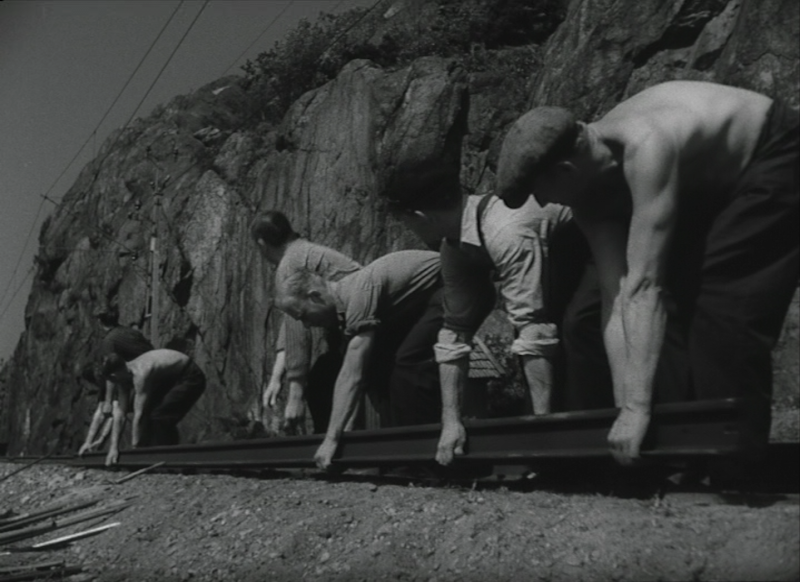
Port of Call is next. This one starts out strong, with some powerful performances and insightful writing, but like
Crisis, things get a little too elevated. It's the story of a young woman dealing with depression who tries reaching out one last time to a local sailor. It can be a little hard to relate to the pre-feminist values of this 40s film, the way women are demonized for having a past boyfriend and outcast from society for having had an abortion. But it's not just a question of changing times with the campy ways this film deals with reform school girls, which is a little too reminiscent of those cheesy
Arkoff films from the 50s, including a cast easily pushing 30 playing teenagers. But it's important to note that even when some scenes in these early Bergman films induce a little eye rolling, they're surrounded by terrific characters far better than you'll find in the work of almost any other filmmaker. There's also some great, atmospheric locations thanks to the debut of Bergman's first longtime DP,
Gunnar Fischer.
 |
UK 2004 Tartan DVD first; US 2007 Criterion DVD second;
US 2018 Criterion BD third; UK 2021 BFI BD fourth. |
This time, the Tartan DVD is 1.32 and Criterion is 1.33, and again, it's just a question of some very slight vertical squishing. Otherwise, they're virtually identical. But the 1.38:1 blus look leagues better than both. The framing looks less cramped and the corrected exposure brings way more detail to light. Again, the new 2k scan is so much sharper and clearer, it brings detail to life and finally looks like film rather than video tape. All four discs just give you the original Swedish mono, in LPCM on the blus, with removable subtitles. It's possibly worth noting that none of the discs subtitle the brief moments where characters speak English towards the end of the film. And the only extras are trailers and Strick notes on the Tartan, and the notes in the books of the boxed sets.
1949's
Thirst, a.k.a.
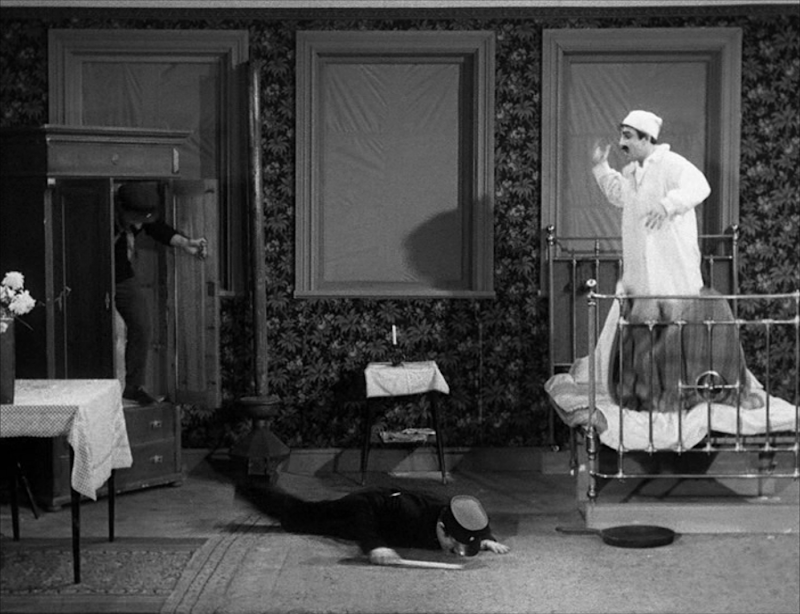
Three Strange Loves, finds Bergman getting a grip on his compulsion to go over the top. We're easing out of that brief "early Bergman," and into his more consistently mature work already. The biggest weakness of this film, for me at least, is that nothing really stands out.
Thirst wasn't written by Bergman, and while he clearly still brings his sensibilities to the characters' intimate scenes to make it fit into his oeuvre, that makes it less memorable. It's the one that I've watched a couple of extra times just because I couldn't remember if I'd seen it before. Like the
Three Strange title suggests, the story is fairly disjointed, apparently because the book it was based on was actually a collection of short stories. It has some moments and definite qualities, and like I said before, doesn't quite embarrass itself like some of his previous efforts did in their most heightened moments, but it also never reaches their peaks. It's cursed with just being all around average.
 |
UK 2004 Tartan DVD first; US 2007 Criterion DVD second;
US 2018 Criterion BD third; UK 2021 BFI BD fourth. |
Once again, the only real difference between the two DVDs is a very slight vertical squish. Criterion and BFI's new 2k scan of the duplicate negative, then, pulls out lots of fine detail and gives us a film-like HD presentation of this film for the first time ever. The slightly wider 1.37:1 framing reveals some extra slivers, but nothing major this go around. The audio is also again bumped up to LPCM, and all four discs offer removable English subtitles. As ever, the only features are the trailers and Strick insert on the Tartan and the notes in the books of the boxed sets.
And we end with probably the best of all these films, 1950's
To Joy. Stig Olin is back as Stig, a violinist who winds up marrying the only woman in his orchestra, Martha. They get married and have children, and the film chronicles the utterly relatable ups and downs of their life together.
Wild Strawberries'
Victor Sjöström is excellent as their conductor who winds up taking a father figure role in their lives, and if you blink, you'll miss one of
Erland Jospehon's earliest roles. I'm not sure he even has a line.
To Joy feels like an effective forerunner to
Scenes From a Marriage, but with the added element of Bergman paying homage to the power of classical music.
 |
UK 2003 Tartan DVD first; US 2007 Criterion DVD second;
US 2018 Criterion BD third; UK 2021 BFI BD fourth. |


Tartan's and the Criterion DVDs again look almost the same, except for Criterion being ever so slightly taller and skinnier. Brightness, detail, everything else all look the same. Flipping back and forth between screenshots feels like I'm just ever so slightly resizing them. The blu-rays, on the other hand, are another 2k leap forward. Their 1.37 framing pulls in more on the sides, but it's really all about the boost in clarity, clearing up both fine detail and film grain. The contrast also adds more nuance to the shading, which is too contrast-y and blown out on the DVDs. Again, the audio is lossless on the blus in LPCM, and all four discs off removable English subtitles. The only downside is that, again like all the previous examples, Neither Criterion nor BFI cooked up any new extras except for the liner notes in their books, while yes, Tartan has those same two Bergman trailers and the insert with notes by Philip Strick.

The take-away here is that none of Bergman's work is to be overlooked. His worst films still out pace almost all other filmmakers', and not all of his earlier films rank among his worst at all. While we've seen that all five of these films had perfectly serviceable DVDs for their time, Criterion and BFI's blu-rays take it to a whole different level. You'll have to buy both sets to get all five on blu, but both also offer enough exclusive films to justify the redundancy and cost. And while the 'Early Bergman' set includes his very earliest films, these five aren't strictly speaking his first five. We've actually skipped six other films on our way to 1950's
To Joy, six more films that are absent from the Bergman box, but three of which BFI tackled.