Early Bergman - They're All On Blu Now, Thanks To the BFI!

As with the Werner Herzog collections' coverage, it's time to start bundling up these Ingmar Bergman posts, because this Criterion box is literally massive.  And I think a great way to do that is to start off with Criterion/ Eclipse's Early Bergman DVD set from 2007.  For one, it's just a neat little grouping of films that make sense to be covered together.  But it also includes an example of something else I'm very interested in going over here: Bergman films not included in Criterion's Ingmar Bergman's Cinema collection.  I just heard a famous filmmaker on a generally extremely knowledgeable movie podcast, refer to the set as "every Bergman film," so besides worming my way through the ins and outs of every single one of these transfers, I'd also really like to raise awareness of all the Bergman films still M.I.A. in HD, or even DVD.

Update 4/28/19 - 2/21/22: Criterion's set is wonderful, but happily it isn't the end of the story.  The British Film Industry has given us more Bergman debuts on blu-ray with their recent box set, Ingmar Bergman Volume 1.  It includes eight of his early films, including all five of the films covered here, plus three more that we'll be looking at in my next post.
To be fair, you can guess why this first film might've been left out of Criterion's box.  1944's Torment, a.k.a. Frenzy or Hets, is Ingmar Bergman's first produced screenplay, but he didn't direct it.  Now, I'd argue that Bergman's talents as a writer are at least as important to his works becoming masterpieces as his direction, probably moreso.  But okay, they're sticking with films he directed for their set.  Makes some sense; they're narrowly defining what constitutes "Ingmar Bergman's Cinema."  Still, it's odd considering Criterion already licensed this film for DVD.  Like, it's obvious the only reason Face To Face is absent from their set, for example, is that Olive Films beat them to the US rights.  But this is the only Bergman film already inducted into the Criterion catalog that didn't make the box.

I'm a lot less annoyed at them letting it slip through their fingers, though, now that the BFI has put it out on blu in the UK.
After all, it's certainly not undeserving.  The tense drama is more gripping than most of the other films in this collection.  Directed by Alf Sjöberg, the direction does feel a bit more static and boxy, more akin to other films of its period than Bergman's dynamism.  But some shots produce a real noir flair, and more importantly the story and the characters are certainly there.  Stig Järrel, who'd go on to play Satan himself in Bergman's The Devil's Eye, plays a headmaster nicknamed Caligula who's all to happy to live up to the moniker.  He delights in terrorizing his students in the classroom, but things come to a head when a twisted sort of love triangle develops between him, one of his students and a young woman who works in a campus shop.  It all becomes dangerous to the point that this film shifts from drama to thriller.
UK 2004 Tartan DVD first; US 2007 Criterion DVD second;
UK 2021 BFI BD third.


Criterion may've given all these films their US DVD debuts with their 2007 Eclipse set, but Tartan had already issued them in the UK on region free discs back in 2003 and 2004.  So those were the editions I originally acquired, and as you can see, there isn't a world of difference between the US and UK DVDs.  They seem to be using the same basic, fullscreen transfers with indistinguishable levels of detail, brightness and contrast.  But they're not strictly identical.  The aspect ratios are just slightly different - Tartan is 1.34:1 and Criterion is 1.33:1 - but Tartan actually displays slightly extra picture information around all four sides.  The BFI, meanwhile, was restored in Sweden with a fresh 2k scan of the interpositive - the same set of restorations used for the Criterion box.  But this is the first time we get to see it for Torment, and as you'd expect, it looks terrific.  Framed now at 1.37:1, the blu reveals more along all four sides, and looks much crisper in HD, with a strong encode of very clearly captured grain.  All three discs include simple, but happily clean mono audio tracks (in LPCM on the blu) with removable English subtitles.

Both DVDs are also completely barebones, though Tartan sticks on a couple other Bergman trailers (Persona and Autumn Sonata) and includes a nice 4-page insert with notes by Philip Strick.  But BFI has actually come up with something pretty great - a 1982 audio interview with Bergman that plays over the film like an audio commentary.  Now, if you've played your way through the entire Criterion box and other special editions of his films, you might be feeling pretty tired of Bergman interviews, where he often told the same anecdotes about his life over and over.  But this one, which is over an hour long, is all about Sjöberg, so it's entirely fresh content and full of great insight into this film and the director's whole career.  The BFI set also includes a video essay, which is pretty good but generalizes about Bergman's early film career rather than focuses on this film, and a 96-page booklet, with essays on every film, including this one.
Next we come to Bergman's directorial debut, 1946's Crisis.  The camerawork is more fluid, and the powerhouse melodrama is still there, but this time it crosses the line and veers into corniness at times, particularly by the conclusion.  It's the story of a young girl living in a idyllic small town who finds out she's adopted, and who's birth mother wants to take her back.  Her adoptive mother objects, but her real mother seems to have come up in life and now owns a fancy beauty salon on the city.  Unfortunately for everybody, however, she still has ties to her earlier, criminal life, particularly in the form of her boyfriend and possible pimp (early Bergman regular Stig Olin), who takes an immediate shine to the new young lady who just got delivered into his life.
UK 2004 Tartan DVD first; US 2007 Criterion DVD second;
US 2018 Criterion BD third; UK 2021 BFI BD fourth.


So, again, the US and UK DVDs are pretty similar.  Again, the US is 1.33 while the UK is 1.34, but this time there's no extra information, the US disc is just slightly vertically stretched.  Or the UK disc is slightly vertically squashed.  The difference is so minute, it's hard to judge which is correct.  And the only other difference is that the Tartan DVD is slightly brighter.  But both DVDs are far too low contrast and look washed out.  Thankfully, the blu-rays come in and makes everything better with a fresh 2k scan.  Yes, all the BFIs and Criterion blus down the rest of the page use the same scan and look virtually identical.  The updated 1.37:1 framing reveals a little more image all around, contrast is great with true blacks, and detail is a lot more refined, if a little soft, as this one is taken from the interpositive, where the subsequent blus in this post were all from a duplicate negative.  But we can finally see the film grain, and it's very clearly captured.  It's still a huge boost.

All four discs include the original Swedish mono, but the blus bump it up to LPCM, and all three include removable English subs.  There are no special features at all, except for the same Persona and Autumn Sonata trailers on the Tartan disc, and of course, all the other movies and stuff on the other discs in the boxed sets.  But the only thing that's Crisis related are the notes in the Criterion and BFI books.  Oh, and the Tartan DVD has another insert with notes by Mr. Strick.
1948's Port of Call is next.  This one starts out strong, with some powerful performances and insightful writing, but like Crisis, things get a little too elevated.  It's the story of a young woman dealing with depression who tries reaching out one last time to a local sailor.  It can be a little hard to relate to the pre-feminist values of this 40s film, the way women are demonized for having a past boyfriend and outcast from society for having had an abortion.  But it's not just a question of changing times with the campy ways this film deals with reform school girls, which is a little too reminiscent of those cheesy Arkoff films from the 50s, including a cast easily pushing 30 playing teenagers.  But it's important to note that even when some scenes in these early Bergman films induce a little eye rolling, they're surrounded by terrific characters far better than you'll find in the work of almost any other filmmaker.  There's also some great, atmospheric locations thanks to the debut of Bergman's first longtime DP, Gunnar Fischer.
UK 2004 Tartan DVD first; US 2007 Criterion DVD second;
US 2018 Criterion BD third; UK 2021 BFI BD fourth.


This time, the Tartan DVD is 1.32 and Criterion is 1.33, and again, it's just a question of some very slight vertical squishing.  Otherwise, they're virtually identical.  But the 1.38:1 blus look leagues better than both.  The framing looks less cramped and the corrected exposure brings way more detail to light.  Again, the new 2k scan is so much sharper and clearer, it brings detail to life and finally looks like film rather than video tape.  All four discs just give you the original Swedish mono, in LPCM on the blus, with removable subtitles.  It's possibly worth noting that none of the discs subtitle the brief moments where characters speak English towards the end of the film.  And the only extras are trailers and Strick notes on the Tartan, and the notes in the books of the boxed sets.
1949's Thirst, a.k.a. Three Strange Loves, finds Bergman getting a grip on his compulsion to go over the top.  We're easing out of that brief "early Bergman," and into his more consistently mature work already.  The biggest weakness of this film, for me at least, is that nothing really stands out.  Thirst wasn't written by Bergman, and while he clearly still brings his sensibilities to the characters' intimate scenes to make it fit into his oeuvre, that makes it less memorable.  It's the one that I've watched a couple of extra times just because I couldn't remember if I'd seen it before.  Like the Three Strange title suggests, the story is fairly disjointed, apparently because the book it was based on was actually a collection of short stories.  It has some moments and definite qualities, and like I said before, doesn't quite embarrass itself like some of his previous efforts did in their most heightened moments, but it also never reaches their peaks.  It's cursed with just being all around average.
UK 2004 Tartan DVD first; US 2007 Criterion DVD second;
US 2018 Criterion BD third; UK 2021 BFI BD fourth.


Once again, the only real difference between the two DVDs is a very slight vertical squish.  Criterion and BFI's new 2k scan of the duplicate negative, then, pulls out lots of fine detail and gives us a film-like HD presentation of this film for the first time ever.  The slightly wider 1.37:1 framing reveals some extra slivers, but nothing major this go around. The audio is also again bumped up to LPCM, and all four discs offer removable English subtitles.  As ever, the only features are the trailers and Strick insert on the Tartan and the notes in the books of the boxed sets.
And we end with probably the best of all these films, 1950's To Joy.  Stig Olin is back as Stig, a violinist who winds up marrying the only woman in his orchestra, Martha.  They get married and have children, and the film chronicles the utterly relatable ups and downs of their life together.  Wild Strawberries' Victor Sjöström is excellent as their conductor who winds up taking a father figure role in their lives, and if you blink, you'll miss one of Erland Jospehon's earliest roles.  I'm not sure he even has a line.  To Joy feels like an effective forerunner to Scenes From a Marriage, but with the added element of Bergman paying homage to the power of classical music.
UK 2003 Tartan DVD first; US 2007 Criterion DVD second;
US 2018 Criterion BD third; UK 2021 BFI BD fourth.


Tartan's and the Criterion DVDs again look almost the same, except for Criterion being ever so slightly taller and skinnier.  Brightness, detail, everything else all look the same.  Flipping back and forth between screenshots feels like I'm just ever so slightly resizing them.  The blu-rays, on the other hand, are another 2k leap forward.  Their 1.37 framing pulls in more on the sides, but it's really all about the boost in clarity, clearing up both fine detail and film grain.  The contrast also adds more nuance to the shading, which is too contrast-y and blown out on the DVDs.  Again, the audio is lossless on the blus in LPCM, and all four discs off removable English subtitles.  The only downside is that, again like all the previous examples, Neither Criterion nor BFI cooked up any new extras except for the liner notes in their books, while yes, Tartan has those same two Bergman trailers and the insert with notes by Philip Strick.
The take-away here is that none of Bergman's work is to be overlooked.  His worst films still out pace almost all other filmmakers', and not all of his earlier films rank among his worst at all.  While we've seen that all five of these films had perfectly serviceable DVDs for their time, Criterion and BFI's blu-rays take it to a whole different level.  You'll have to buy both sets to get all five on blu, but both also offer enough exclusive films to justify the redundancy and cost.  And while the 'Early Bergman' set includes his very earliest films, these five aren't strictly speaking his first five.  We've actually skipped six other films on our way to 1950's To Joy, six more films that are absent from the Bergman box, but three of which BFI tackled.

Controversy Resolved: Don't Go In the House

Scorpion announced their blu-ray edition a good while ago. 1980's Don't Go In the House isn't an A-list horror title, but it's a solid genre flick with a respectable following, and this was going to be a fresh HD transfer with some new extras.  It got pushed back a few times, but before fans could get too grumpy about it, the label announced a pretty awesome reason for it: they uncovered long forgotten, presumed forever lost, footage of a longer cut of the film.  And not just padding with two babysitters bickering over who gets to borrow a blouse to pad out the running time like Halloween's TV cut or something, these were apparently big, juicy scenes.  So now we're really excited for this release!  Even those of us who thought we might've been fine just hanging onto our Shriek Show DVDs figured apparently we'll have to upgrade after all.  But now that it's here, well, it's flawed, and it's got some fans upset and disappointed.  It's totally the sort of thing that would prompt a replacement program from Scream Factory or Arrow, but Scorpion's a smaller company, so we'll probably just have to live with it.  Just what's the deal?  Is it still worth getting anyway?

Update 12/23/16 - 2/10/22: Well, that settles that.  Severin has released a brand new, 2-disc release, in conjunction with Arrow, that fixes Scorpion's issue.  Problem solved in style!
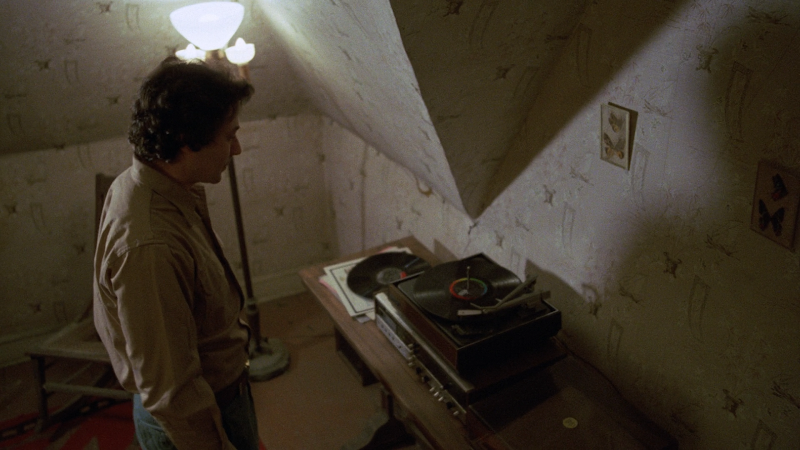
Don't Go In the House is a pretty generic horror movie title, coming out right around the same time as Don't Go In the Woods, Don't Look In the Basement, and Don't Go In the Attic.  You have every reason not to remember if you've seen this movie when you hear the title, but I can clear it up for you real quick: it's the slasher movie where the killer (Dan Grimaldi of The Sopranos)'s weapon of choice is a flamethrower.  There ain't a lot of those!  So I trust that's cleared that up.

It's also actually a pretty good flick.  I put off seeing it for a long time, because it just seemed like the sort of cheap, trashy slasher I wouldn't get much out of.  But when I finally got to the point where I was searching just to find any 80s horror movie I hadn't already seen at all, Don't Go In the House's number came up, and I was actually pretty impressed.  It's definitely got fuller production values than I would've expected, including some great locations and impressive fire effects.  It's got strong performances by actors who clearly cared about their craft and were putting in the work to make something really worthwhile.  Although, with that said, much (all?) of the dialogue was re-dubbed in post, and some of the supporting cast (like that priest!) don't come out very well.  Still, for the most part, it's all engrossing and effective.  The music's good (holy cow, that disco song's catchier than the one in House On the Edge Of the Park!) And the story has a bunch of great moments where it goes to smart and interesting places you wouldn't have expected.  No spoilers, but for me it was the nightclub scene that really turned this from a movie I'd rented to a film I had to have in my collection.  If Martin Scorsese had made a horror film early in his career, I feel like this is what he would've come up with.
So how about those new scenes?  Yeah, they're substantial. Almost ten minutes worth in big chunks.   There's a major scene with Dan Grimaldi laying a major monologue down the burnt corpses of his victims he keeps in his room, even giving one a big, wet kiss.  There's another big scene with that dubbed priest, and more of the first killing.  In a way, you can see the reason for cutting a lot of it: are audiences going to sit for long, dramatic speeches while waiting for their exploitation?  And yeah, the cuts probably do help the pace for people who aren't enjoying this film much anyway.  But if you appreciate this film, you'll appreciate it even more with the scenes restored.  They really flesh it out, and I don't even think they should've been stuck on the disc as "deleted scenes," because once you've seen the movie with them, they really feel absent from the shorter, theatrical cut.  It's just a better film with them in.
This man's been struck by Boogie Lightning
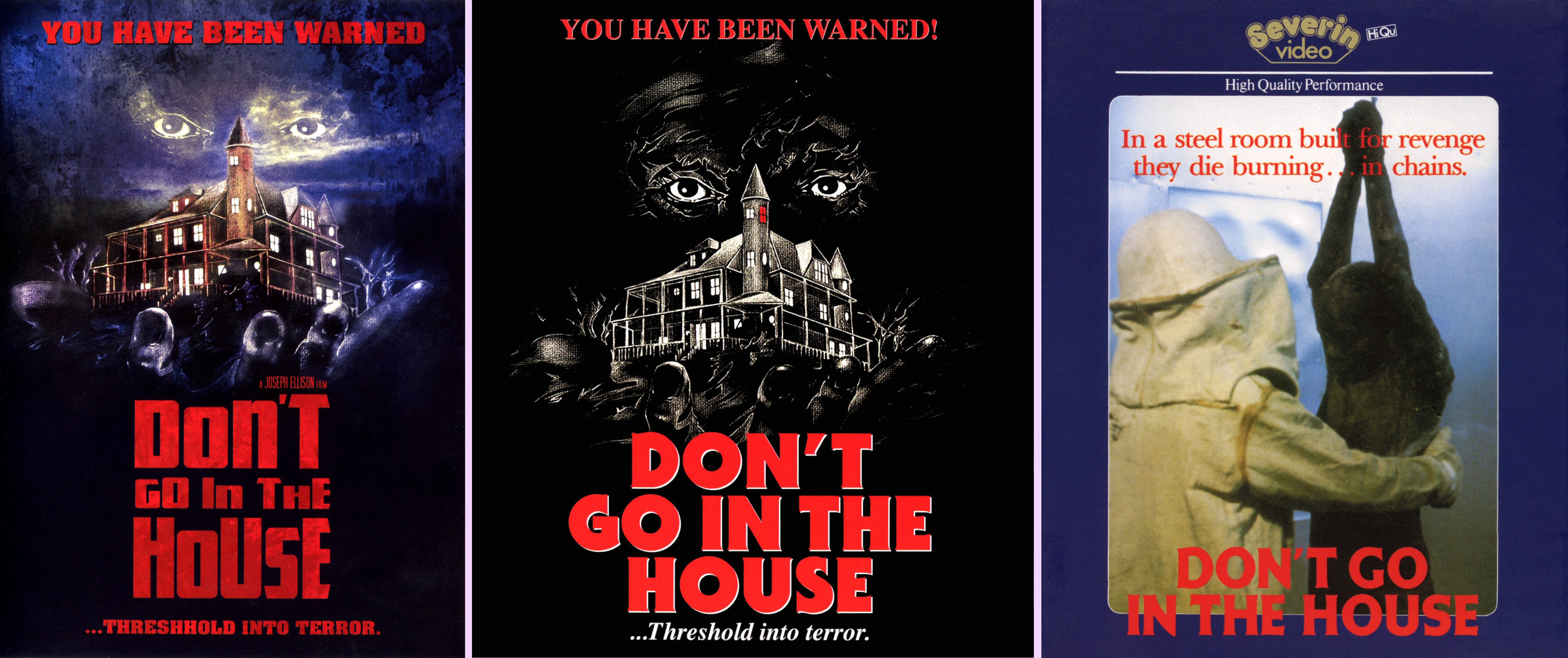
For the longest time, this film used to only be available on a DVD in a fullscreen, edited version from a label so generic, their name was DVD, LTD.  But in 2005, Shriek Show did right by the film, releasing it as an uncut, widescreen special edition.  They reissued it in a triple pack called Grindhouse Psychos Triple Feature with Cop Killers and Tenement in 2008, and Arrow released it in the UK in 2012, minus the extras.  Subkultur released it in HD for the first time in Germany in 2015, and then Scorpion gave it a brand new scan, and like I say, those new scenes the following year.  Unfortunately, they also made a major screw up.  But now we can put all that behind us, with Severin and Arrow's new special edition set (distributed in the US by Severin and Arrow in the UK) in 2022.
1) 2005 Shriek Show DVD; 2) 2016 Scorpion BD; 3) 2022 Severin theatrical BD;
4) 2022 Severin television BD; 5) 2022 Severin integral BD.


The Shriek Show DVD was pretty good for a DVD; the only really problem is that it was interlaced.  Naturally, that's been corrected on the blu-rays.   Every release is in 1.78:1 (despite Severin claiming 1.85:1 on their back cover), but you'll notice the actual framing differs.  Shriek Show has more picture on the left, and Scorpion has more on the right, and it's been adjusted vertically, too.  Severin, meanwhile, has made a brand new 2k scan of the OCN, and it matches Scorpion's framing for the most part, but reveals more on the bottom and left-hand side, and adjusts a few individual scenes differently.

Anyway, the DVD has a natural softness to it from the SD compression, which the HD clears up nicely.  Scorpion's blu has really nice, subtle grain and though there's a little damage to the film elements carried over, it's nothing that pulls you out of the film or gets annoying.  Overall, Scorpion's transfer is pretty terrific.  And Severin/ Arrow's is pretty equivalent.  The color timing is different, though determining which is better feels pretty arbitrary and varies shot by shot.  Detail levels are about the same, though the new disc is a bit sharper and resolves the grain a little more distinctly.  But it's not exactly a revelation.  There are reasons to replace the Scorpion disc for the Severin for sure, but PQ isn't really one of them.

Oh, and the three cuts across the two Severin discs all use the same transfer.  The only difference is that the theatrical cut is, for whatever curious reason, slightly brighter than the other two.  And I've been reading speculation on forums about whether the Severin or Arrow versions will differ.  Well, I'm pretty confident saying they won't, because disc 1 in the Severin set is actually an Arrow disc, with Arrow's logo coming up at the start and Arrow-style menus, etc.  So the only difference at all should be the region coding.
The audio is a whole other ball of wax.  I guess I'll start by saying that Scorpion's DTS-HD track is both pretty full in general, but also full of pops and hisses.  However, the Shriek Show is also like that.  The Scorpion does have more pops (that recur regularly, like it's from a damaged reel), but the hiss and general issues seem to be mostly tied to the film itself.  The audio commentary mentions this, and the overdubbing knocks some of the sync off.  There's one scene in a store, where a clerk calls out to another employee, and you can't hear what he's saying after the first word or two, but the sentence is clear on the old DVD.  But that's a rare exception.  It's not too distracting, but definitely feels like you're watching an old, worn movie.

Severin's now is the best of all.  It's all lossless: DTS-HD on the integral cut, LPCM on the other two; though they all sound about the same.  It's the clearest, doesn't have that recurring pop, and does have that line of dialogue.  They also include English descriptive audio tracks on the theatrical and integral cuts, and optional English subtitles on all three - something the previous discs lacked entirely.  So it's already a good step forward, but that's just the half of it.
Because why is Scorpion's blu so ding-dong controversial?  Well, their audio uses the censored TV track.  All the curse words have been replaced.  Admittedly, this movie isn't as full of curse words as a lot, so most scenes get away unscathed, but a long argument towards the beginning of the film where Grimaldi's character is repeatedly accused of being a f____t has a whole new, altered meaning.  One line in particular really sounds like something's wrong, where a girl in a car calls a guy an ass____, and the sound clearly cuts right out during the second syllable.  Severin/ Arrow have the proper uncut audio for both the theatrical and integral/ extended cuts, and if you're curious to hear the clean version, they give ya that, too, on the television cut.
Now Shriek Show came pretty nice with extras.  They got star Dan Grimaldi in for an on-camera interview and an audio commentary.  And he gives a really good commentary, well informed and with a lot of memories to share.  The interview does have some repeated anecdotes, but also enough unique parts to make ti worth watching, too.  Besides that, there's the trailer, some bonus trailers, and a featurette that shows a couple moments in open matte, revealing some extra nudity and bits.

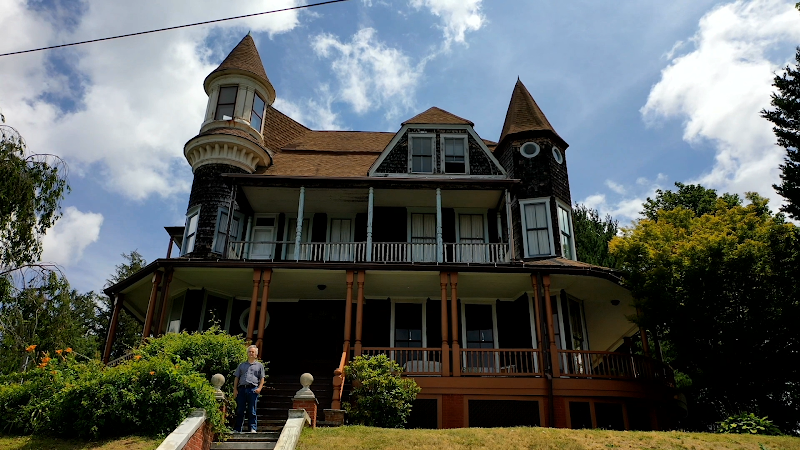
Scorpion carries over all of those Shriek Show extras except the open matte bit.  That's fine, though, because Scorpion's framing includes the full frontal nudity that Shriek Show cropped out anyway, so there wouldn't be much point to them including it.  By the way, you can hear the original curses in the background of the audio commentary, and yes, the commentary goes silent during the added scenes.  They've also got some brand new extras, including an interview with co-star Robert Osth and a cool tour of the titular house, which is now a bit of a historical/ tourist attraction.  Those are both quite good.  Then there's another featurette on the house, where the guy who runs it explains how he thinks it's haunted and that he's a ghost hunter with an ebook you can buy.  That's a bit silly.  But over-all, it's a nice, fuller special edition.  Oh, and it has reversible artwork, too.
And Severin/ Arrow?  Well, first of all, they've kept the Shriek Show extras, even the open matte flame-thrower scene, but they've lost Scorpion's.  However, they've also come up with a bunch of mostly new stuff.  First of all, there are two new audio commentaries: one by director Joe Ellison and his producer/ wife Ellen Hammill, which is fantastic.  It's full of great info, some of which will be new even to die-hard fans, and also funny.   And there's an expert commentary by Stephen Thrower, which is... not his best work.  And it doesn't help that he winds up repeating a lot of stuff from the previous commentaries, except here it's second-hand.  There's also an on-camera interview with Ellison, as well as talks with co-writer Joseph R. Masefield and co-producer Matthew Mallinson.  We don't have Scorpion's featurettes on the house, but we have a brand new location tour, which covers all the locations and also gets into the weird haunting stuff.  It's pretty great.

There's some filler, too, including a featurette where Ellison is asked about NY grindhouse theaters along with some other filmmakers.  It's basically a half-hour continuation of that 42nd Street Forever doc, and even this specific featurette has been recycled from other discs before (it's definitely already been on 88 Film's Just Before Dawn, Turbine's Kill Squad, and probably one or two others).  And there's a video essay by another critic who doesn't have much to add either.  It feels like we're stretching to justify the second disc, but regular readers know what I say in situations like this, hey, I'll take 'em.  It's always better to err on the side of more than less.  And the good new extras are so good, this new release is a big win in that department anyway.

Severin also has multiple trailers for this film, and just for fun, other Don't horror flicks of the time.  There's a trailer gallery, a slipcover designed to match the British VHS cover (which makes more sense for the UK release than the US one) and reversible cover art.  And if you get the Arrow-distributed release, there's also a bonus third disc, which includes some rather silly extra presentations of the film: see it in VHS quality!  See it open matte with or without the BBFC cuts!  See it with the old commercials!  They also lose the open matte scene (no loss, since their bonus disc includes the whole film open matte) and also throw in the director interview from the Subkultur blu.   So it's cute I guess, and comes with a couple more scraps, but hardly worth going out of your way to secure.
So, we've finally gotten the definitive version we thought we were getting in the 2010s.  For a while there, dedicated fans were getting both of the old blus; but unless you're actually going to edit together a composite cut with Scorpion's 2k transfer and Subkultur's uncut audio, what's the point in that?  You can only watch one version of a film at a time.  Well, thank goodness we don't have to think about that anymore!  Severin/ Arrow have solved everything and come up with some cool new extras to boot.  If you have the Scorpion disc, though, you might want to hang onto it for the Osth interview - it's a shame they couldn't have licensed that.  But they've definitely put together a much stronger package over all.  And yeah, all thing's being equal, the Arrow the one to go with for the additional odds and ends, but both Severin and Arrow have all the important stuff, so don't feel like you're missing out if you're region A.

Eyes of Fire, Back On the Map!

Hey, did any of you guys watch this year's critically acclaimed horror The VVitch this summer and think: eh, pretty cool, but it would've been just that little bit more enjoyable if it had been an even weirder, obscure 80s film?  Well, then have I got news for you - it was!  It's call Eyes of Fire from 1983, and it's really pretty cool, even though it's somehow managed to never have been released on DVD or blu-ray to this day.

Update 8/22/16 - 2/31/22: It's so great to strip the M.I.A. tag off of a post.  For a while, hopes we're up that Lions Gate might release this through their Vestron line, right up until Severin surprised us all with their announcement.  Not only is it restored, in widescreen and HD with some nice special features, but it turns out there's even an alternate version that's over 20 minutes longer!
To be fair, The VVitch isn't really Eyes of Fire 2016, either in the sense of being an obscure remake or a rip-off.  But the former seems to owe enough to the latter to at least raise an eyebrow or two.  A strict, pious early American settler is driven out of his settlement for religious reasons and forced to take his family to try and live out on their own.  They set up a tiny farm out away from anybody else, but things start to go wrong for them, and we see that it's due to subtle the influence of an evil witch living in the surrounding woods.  And what starts as a tragic, corrupting miasma of omens and bad fortune slowly builds into an ultimately fatal conflict, testing the family's faith and pitting them against each other.  That is the plot to both films.

But of course, once you dig into the particulars, strong distinctions start to appear all over the place, and each can be safely said to be their own movie.  So let's talk about what sets Eyes of Fire apart.  The patriarch in Eyes is exiled specifically for objecting to the burning women as witches, and it's believed by many that at least one of the women in his company is a witch... and so when the family is cast off down the river on a rickety old raft and takes up shelter in some burned down cabins they stumble upon in a valley (the lord provides, or huge "get out of there" red flag?), it's unclear whether the malevolence set upon them is coming internally or externally.  This film also has the extra twist that the family has been pushed into Shawnee Indian territory, and after an initial attack, it's never really clear whether any trouble happening upon them is the work of local Indians, a witch, or their own madness.  And I won't get too spoilery here, but I will say that when all is revealed, it's not a disappointment.
This is a pretty smart, original horror film.  It's not perfect - its budget shows.  It has some pretty great production values for the most part, with terrific locations beautifully shot.  And the special effects range from awesome to dodgy and dated... but always inventive.  A wide variety of techniques are used, so it's always fascinating: disappearing, slightly inhuman figures in the woods, faces in trees, black skies.  Thankfully, the movie is played completely earnestly - there's nothing campy or tongue-in-cheek within a mile of this film.  Except for a cheesy French accent in the very beginning, the cast do a good job of maintaining period-style language, though it isn't quite as distant as what we got in The VVitch. There's some surprisingly good dialogue.  And despite all the television actors, this is not a made for TV movie; so while this isn't a terribly graphic, gory film, it's also not a predictable kind of exercise in PG-safe nobody will die affairs.  Overall, this film has the feeling of a first-time filmmaker's devout attempt at a masterpiece that was going to blow the world away; and although it never really succeeded, it's still pretty damn interesting in an off-the-beaten-track kind of way.
So let's talk alternate versions.  The original cut is titled Crying Blue Sky.  It's over 22 minutes longer than the released as Eyes of Fire, and Eyes has some exclusive footage in it, meaning there's even more stuff you've never seen before in Crying.  And I have to say, this long-lost Crying version is pretty much better in every way.  It's at once subtler and more coherent, maintaining some mystery that Eyes spoils early on (including some clumsy flash forwards), yet eventually finishing more coherently without losing any of its utterly bizarre curiosity value.  It has a different, less cheesy ending.  And on a purely exploitational scale, Crying has a higher body count and more nudity.  Fans should be thrilled to finally get their hands on this.

And we have, thanks to Severin's brand new blu-ray, released as part of their massive 15-disc (well, 12 BDs and 3 CDs) boxed set, All the Haunts Be Ours: A Compendium of Folk Horror, released last month.  Or, if that was a little rich for your blood, the single disc edition was released just this week.  Prior to this, Eyes had never been released on blu or DVD, in the USA or outside of it.  Well, apparently there is a rather poor DVD from Thailand that's sourced from a VHS; but apart from that, anything you were seeing out there were homemade bootlegs.  The best we had was this here laserdisc, which like Looking for Mr. Goodbar, is so old it predates chapter marks.
1) 1984 Vestron LD; 2) 2022 Severin Crying BD; 3) 2022 Severin Eyes BD.
Let's get the laser out of the way.  It's way too boxy at 1.30:1, though it's at least open matte.  The colors are overwrought with video noise, though the image is sharper than VHS.  But that's about all I can say for it.  It's clearly taken from a print, complete with cigarette burns and occasional flecks and damage.

Looking at the blu now, both versions of the film are 1.85:1 and in proper 1080p, but otherwise they're clearly quite different from each other.  The shorter, Eyes of Fire cut is presented as the main version of the film, the one that starts if you just hit "Play" on the menu, and easily looks the best, sporting a fancy, new 4k scan of the original negative.  Crying is tucked away in the extras, and is taken from an answer print.  But even that, though a little rougher for wear, is a stunning improvement on all that came before.  It's over contrasty, crushing some detail in the shadows.  But otherwise, quite excellent.  Still, the Eyes cut is even nicer, with much more true-to-life color timing.  And while both are framed at 1.85, the Eyes cut does draw further back to reveal a little extra picture along all four sides, including more on the left and right than even the open matter laserdisc.
Vestron's disc just gives you a slightly fuzzy mono track with no subtitle options.  Severin bumps the mono up to lossless DTS-HD on both cuts of the film, though there is a little distortion and noise on Crying.  Severin also provides optional English subtitles for Eyes, though not Crying.

And finally, this film has some much needed extras!  The signature piece is an interview with the director, by Stephen Thrower, who goes over his beginnings as a still photographer, the making of this film, and his efforts to distribute it.  The visual layout is an odd choice, though.  Anyway, after that is an expert commentary by Colin Dickey, which does a pretty good job exploring some of the film's themes, though he doesn't seem to have been made aware of the Crying Blue Sky, which is a shame, because it probably would've furthered his analysis.  Still, it's definitely worth a listen for fans yearning to dig deeper into this enigmatic chiller.
Those two special features, the trailer and reversible artwork are the only Eyes of Fire-specific extras, but because this disc is also a part of the All the Haunts Be Ours box, we also get three unrelated short films, that are only joined by the fact that they're folk horror.  Except I don't think one qualifies as horror.  Transformations [above] is a 1972 16mm documentary of a small circle of feminists who get together to enact an uplifting ritual of witchcraft.  It's an interesting artifact that's been well restored.  Then there's an animated version of The Legend of Sleepy Horror, also from '72, narrated by John Carradine, which is a little flat, but tells the story.  And finally there's the much more contemporary Backwoods from 2018, which rather unambitiously adapts a short Lovecraft story.  It plays somewhat like a student film and doesn't attempt the story's original ending, but it's shot well enough and they stick to the period.  None of these shorts are anything I'd run out and buy the disc for, but as free bonuses - hey, I'll take 'em.
I'm really happy that this film is finally getting discovered - it's much more than the prototypical VVitch.  And even more than that, I'm just selfishly thrilled to get my hands on an HD special edition after all these years.  It's a pretty great 80s horror film by any standard, and who knew there was this even longer, better cut hiding away from us?  What a treasure.