Showing posts with label George Lucas. Show all posts

Star Wars! (Laserdisc/ DVD/ Blu-ray/ UHD Comparisons)

Why, it's ApRiL fOoL's DaY, everybody!  And how better to honor this day than to cover a film I never otherwise would... the least exotic film I could possibly think of: a Star Wars.  Except, I could never bring myself to tackle one of the prequels, so how about something slightly less irony poisoned?  I'm thinking George Lucas's original Star Wars (later retitled Star Wars Episode IV: A New Hope in 1981, but you all know I'm not a fan of revisionism, so we'll stick to its proper title) from 1977, a film which, honestly, I still get a kick out of and keep in my pretentious physical media collection.  The "Definitive" laserdisc edition, of course.
a very Special episode.
Why?  Look, I don't think anybody on Earth who could possibly give a fig about Star Wars needs me to explain how Lucas Lucas'd the original trilogy in 1997 by re-editing and tampering with his most famous films (though not just these) with goofy early CGI effects and awkward inserts.  All art is subjective, but it's as close to objective as any stance can be that he made them worse.  He dubbed them the "Special Editions," but he also made them the default version in practically every home video release.  The last, best release before this blasphemy were the special edition 1993 laserdiscs, in the hefty "Definitive Collection" boxed set.  So collectors like myself still grip them tightly while most modern fans who care enough to stick to the originals have been relegated to pirating.  Now, it is true that the original "non-special edition" versions were released on DVD in 2006, in a limited edition set that included both versions of all three films.  Ideally, all things being equal and readily available, that's the official release I'd actually recommend (as of this writing, there's one used copy for sale on Amazon for $170).  But the transfers were just non-anamorphic ports of the laserdisc masters, so I never felt it was worth double-dipping.  Let's take a look!
1) 1993 Fox LD, 2) 2004 Fox DVD, 3) 2011 Fox BD, 4) 2020 Fox UHD.
I've said this before, but it's been a while since I've done a laserdisc, so here's a quick reminder.  All the other discs are digital and can be ripped directly to one's computer for accuracy.  But laserdiscs are analog, so I have to import them through old school cables and are therefore a little less technically accurate (I'd say they appear less washed out on my television).  And of course UHD shots with HDR like these are standard def tone-mapped conversions of their HD originals, so bear that in mind when comparing these screenshots.

So, the framing and aspect ratio are essentially the same, but not perfectly.  The laserdisc is 2.33:1, the DVD is 2.34:1, the BD is precisely 2.35:1 and then the UHD is wider still at 2.39:1.  So we keep gaining extra, barely perceivable slivers.  Of course the boost in clarity is more significant, especially going from laserdisc to DVD, analog stipulation or no.  These being Star Wars products, you could predict that film grain is light even on the UHD.  But it is pretty much all there to be made out once you reach the HD editions, and the colors look both deepest and the most natural in 4k (plus a bit warmer), which is surely the least, or at least the most delicately, tinkered with master to date.  Oh, and for you frame-loving freaks out there, yes the laserdisc is in CAV.

The laserdisc features the audio in a nice bold, surround 4.1 track with optional English closed captioning.  The DVD translates that to 5.1 Dolby EX with optional English subtitles, plus a 2.0 track, with additional French and Spanish dubs.  The BD then kicks that up to a 6.1 DTS-HD track with optional English subs, plus French, Spanish and Portuguese dubs, an English descriptive track and a slew of foreign language subtitles, specifically: Danish, Dutch, Finnish, French, Norwegian, Portuguese, Spanish and Swedish.  And finally, the UHD makes it an English Dolby Atmos mix with optional English subtitles, plus French, Japanese and Spanish dubs, an English descriptive track, and
scales down the foreign subs to just French, Japanese and Spanish.
Not that the Definitive laserdiscs were perfect, even for their day - check out this excellent documentation of every minute flaw in the whole set - but they did give us some very satisfying special features.  Chief among them were commentary tracks for each film.  In the case of Star Wars 1, this featured effects artist Ken Ralston, concept designer Ralph McQuarrie, Lucas, effects artist Dennis Muren and puppeteer/ voice artist Frank Oz, though even with the four of them, it's fairly sparse.  Each film also had a final chapter with video supplements.  So for the original, we got trailers, a gallery of concept art with explanatory voice-over by McQuarrie and an on-camera interview with George Lucas.  It also included a 16-page booklet and a big hardcover book, all packaged in an impressively solid, black case.

Unfortunately, the DVD drops all of that, and replaces it only with a new commentary, this time more lively, by Lucas, sound designer Ben Burtt, Murren and Carrie Fisher, though in both cases, they're not all sitting together but edited individually into the track.  Just a commentary is pretty light for such a mega-movie like this in the heyday of DVD, but if you bought it in a complete trilogy boxed set, you would've also gotten a fourth Bonus Material DVD, with a lot of additional material.  Primarily, it featured a massive two and a half hour retrospective documentary covering all three films.  Then there are three featurettes, roughly fifteen minutes each, focusing on smaller details (i.e. the history of the lightsaber).  There's a massive collection of trailers and TV spots, a couple galleries, an Easter Egg gag reel, and two promos for the prequels and a prequel-based video game.

The blu-ray keeps the DVD commentary and also brings back the laserdisc one.  It also came with three bonus discs if you bought a whole six-film set (the originals and prequels), one of which just relates to the prequels, but the other two is jam-packed with featurettes, interviews, the documentary (now split into three parts for each film), deleted scenes, and just about everything you could want.  The UHD includes both commentaries and most of the short stuff from the blu-ray bonus discs, but not the full-length documentary.  So hang onto your blu-ray sets even if you're updating.
the story of a boy, a girl and an X-Box.
Supposedly, Disney is restoring the original, non-special edition for a theatrical release in 2027, its fiftieth anniversary.  No word of a physical release yet, but they'd finally get me to double-dip if they did it.  I guess you could say I feel... a new hope.  😜

A Disturbance In the Force

Reckon Star Wars is too mainstream for DVDExotica?  Well maybe, but I think I've found a fair exception.  This is A Disturbance In the Force: How the Star Wars Holiday Special Happened.  And it's exactly what the title sounds like, a documentary about the notorious 1978 Star Wars Holiday Special starring Harvey Korman, Bea Arthur and Art Carney that aired once on CBS, and was then never shown or released again, except via bootlegs and pirate rips.  It's one of those cult videos that might be more fun to hear about than actually sit through, so a documentary like this is perfect.  And it's also a special that raises a ton of questions if you do watch it, so again... a documentary like this is perfect.
I was worried this doc would be all comedians and minor celebrities going "OMG, you won't believe how crazy the Star Wars holiday special is!"  And there is a little bit of that in the initial set-up.  People like Kevin Smith, Seth Green and Patton Oswalt recount their memories of first seeing the special and its silliest moments, which is useful for those who've never actually seen it.  There are plenty of clips, too.  But this is actually a dedicated documentary that takes a fairly comprehensive dive into the history and production of the special.  It interviews many of the key surviving creators, and tracks down loads of great archive footage of those who are no longer with us, or unwilling to talk about their involvement.
Co-director Steve Kozak made this movie in conjunction with a book he wrote of the same title, which lends this project some extensive research and contacts. So we get forthcoming interviews with people like writers Bruce Vilanch (Get Bruce!) and Lenny Ripps, costume designer Bob Mackie, director Steve Binder, Fox's VP of licensing Marc Pevers and several of the original cast members.  Pete Sears, of Jefferson Starship, talks about their musical number.  They even talk to Donny Osmond about the Donny and Marie Star Wars-themed episode that preceded the special the year before.  They talk about the silly stuff shooting the special and the strained politics between Lucas and the network behind the scenes.  Really, just about everything you want to know.  And there's plenty of clips of people like Mark Hamill, Bea Arthur, Harrison Ford and George Lucas himself talking about this film in various media appearances.

A Disturbance was released on blu-ray in December 2023 by a little indie outfit called Giant Interactive, but it's a burned disc.  They also put out a separate DVD release, which I believe is actually a pressed disc.
2023 Giant Interactive BDR.
Giant's blu is single-layered, but for a short film with no features, that's more than enough.  And at 20+ gigs, they fill the disc.  The film is presented in 1.78:1, except for some archive footage, including all the clips from the special which are in their original 1.35:1.  The original footage was clearly shot on digital, so there's no question of scanning quality or film grain, but it's nicely compressed; I didn't spot any banding or anything.  Just a nice, crisp HD image with strong colors and clear detail.

And something better than you'd expect from a BDR: this disc includes both a 5.1 and 2.0 mix in DTS-HD with optional English subtitles.  The only extra is the trailer, but even that's more than you usually find on a burned MOD disc.  And it's an amusing one, so you might want to spend the 90 seconds it takes to watch.
If you enjoyed releases like Doomed! The Untold Story of Roger Corman's The Fantastic Four and The Death of "Superman Lives": What Happened?, A Disturbance In the Force: How the Star Wars Holiday Special Happened should be right up your alley... and not just because all three have overlong titles.  It's light, and sometimes quite funny, but never too light or sacrificing legitimate substance for a laugh.

Jurassic Punk Rocks

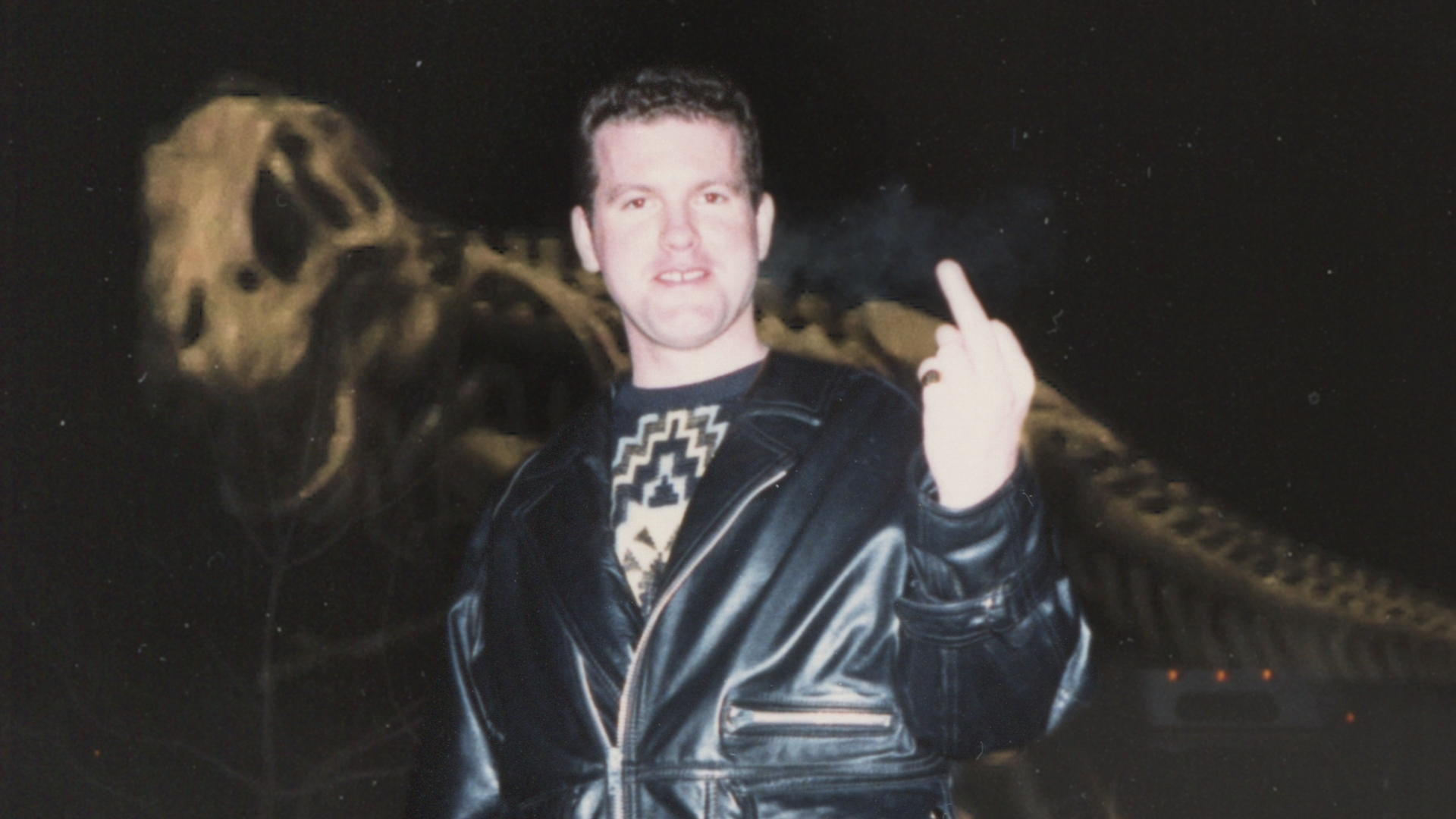
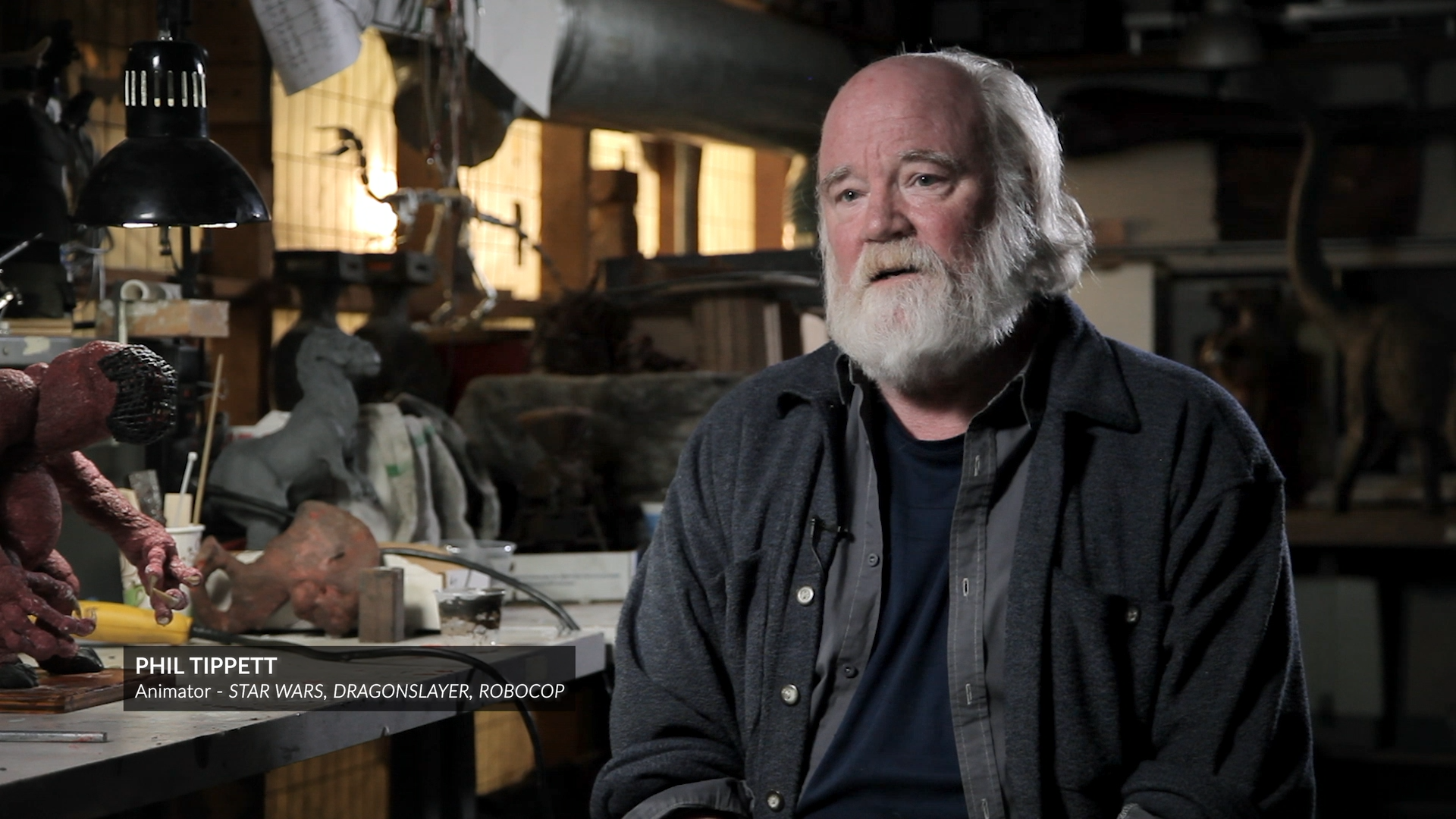
Jurassic Punk is sort of like a sequel to the recent Phil Tippet documentary, Mad Dreams and Monsters.  Or, more than that, it's like a response film, almost a counter-argument.  Where Mad Dreams was about a great stop motion animator who was once the top of the industry but saw himself pushed out by digital effects, Jurassic Punk comes at it from the perspective of the digital maverick the industry tried to hold back.  His name was Steve "Spaz" Williams.
What makes Jurassic Punk stand out from its peers is that it isn't purely celebratory.  We've all seen heaps of Hollywood spotlights on individual artists and creators where everybody is getting together to tell us how wonderful they and there work are.  There's an endless procession of ninety-minute love fests, and honestly, when it's a talented film artist, I'm interested in those.  But what if one of them actually took a cynical stance?  Even though Mad Dreams and Monsters is sort of sad, because after spending the first two thirds explaining how marvelous Tippet (who is also interviewed in Punk) and his work is, it then delves into how he and stop motion animators like him are being pushed out of the industry.  ...Not for long, though, because the pendulum wings back to show how he's making his own new movie on his own terms and that he still has an undying legion of fans who appreciate his older art forms.
Jurassic Punk starts the same way: showing us Williams' rise and demonstrating what's innovative and exciting about the work he does.  And we also see the decline of his professional career.  But things are considerably more complicated here.  He's not pushed out by the younger generation with new ways of doing things, but by the older heads of the industry.  More than that, not only was he denied credit and later jobs, but they actively stood in his way, trying to prevent him from creating the effects that wound up earning his films their place in history.  Was it simply because the industry is corrupt and unfair, though, or did he bring it on himself?  Probably some of both.  Williams is a proud rebel, and his inability to "be political," as he calls it, is clearly a major stumbling block for him in working with others.  A major figure in Mad Dreams is Tippet's wife, Jules, who co-runs his studio with him.  Punk instead introduces us to two ex-wives who had to leave him because of his drinking.
Honestly, this film is just a deeper, more personal dive, as we see him confront his inner demons, whether it's stories of him being tossed out of George Lucas's ranch by the Skywalker Police (yeah, they have their own police force) or struggling to get sober.  There's a compelling documentary here even if you could care less about special effects, which is not something you could say for many other filmmaker portraits.  I'm not making this comparison to dunk on Mad Dreams, which I think is also pretty great; but there's no way anybody in that film was going to allow the camera crew to follow them into the shower and film them have a nude breakdown.  That's a unique feature of Jurassic Punk.
And this film also addresses another issue films like Mad Dreams don't have to: the downside of Williams' innovations.  Say what you want about Tippet's work: maybe it's old fashioned and you the frame-by-frame animation is creaky to you.  But you can't deny the charming creativity of it, even if you might prefer something different in your favorite blockbusters.  But Williams brought forth the modern era of CGI, and as this documentary openly addresses, a lot of it was bad.  There's a segment in this that shows us a lowlights reel of clips from films like The Scorpion King and American Werewolf In Paris, where the CGI is just tacky and embarrassing.  Now, to be clear, those films were not his work: he developed the CGI in The Abyss, Terminator 2 and (obviously) Jurassic Park, which are older and yet still hold up considerably better.  But he and others in the film acknowledge that he's also fairly responsible for ushering in the new era, and possibly making movies today worse in general.  Plus, the creature they show from his own film Spawn is as cringe-worthy as anything in the films they hold up for contempt.  Not that I, or Jurassic Punk, am trying to write-off CGI as a negative; there's a lot of room for debate on how good and bad CGI has been for the film industry.  But that's the point; this film has a debate with conflicting points of view.  You're not going to see an Edith Head retrospective that's compelled to also show us a bunch of harmful consequences that has reverberated from her art throughout Hollywood.  This is a more complicated picture, and that's a good thing.
When this Jurassic Punk was first announced on disc, I thought it was DVD-only, and I remember thinking, maybe I should wait and see if it gets included as an HD extra on some future Jurassic Park release.  But then, thinking about how bad this film makes Dennis Muren look, I figured that was pretty unlikely.  I consigned myself to just getting the DVD, and then the BD listing popped up on Amazon - hurray!
2022 Gravitas DVDR top; 2022 Gravitas BDR bottom.
Not to get too excited.  These are still completely barebones single layer discs MOD DVDR and BDR discs.  They're being sold by Gravitas Ventures exclusively through Amazon, and yes, they're 81 minutes long (the proper running time of the film), despite saying 93 on the back of the cases.   Both discs present the film in its presumably correct AR of 1.78:1, except for some vintage footage in varying ratios (i.e. that 2.40:1 T2 shot up the page).  There is a very, very slight difference in the framing between the DVD and BD, literally just 4-5 pixels worth, that shifts and pinches the DVD; but you'd never spot it outside of a direct screenshot comparison.  But for the record, the distinction is there.  The more important point, naturally, is the increased definition, which is a genuine bump in clarity and sharpness.  Toggle between those screenshots and it's an obviously more attractive image.

Also, both discs offer a 5.1 Dolby Digital track, but I'm happy to report it's in lossless DTS-HD on the blu (often, BDRs tend to come with lossy audio tracks, but as we see here, they don't have to), and optional English subtitles.
So, sure.  I would've preferred pressed discs.  Some extended interviews or other little extras would've been nice (at least the trailer).  But it's a terrific film, and I'm very happy to have a perfectly respectable physical release of it.  Highly recommended, and it's absolutely worth the extra $2 for the HD.

THX-1138: The Other Movie Lucas Lucas'd (Laserdisc/ DVD/ Blu-ray Comparison)

Even people who don't care about movies know about how George Lucas "Lucas'd" his Star Wars trilogy by using CGI to go in and change the movies decades later, and robbing the world of the original films. "Han shot first," right? But it's a little bit less well known that he did the same thing to his other science fiction film, THX-1138. And just as with the Star Wars film, you can get the latest blu-ray, the 2-disc special edition DVD, the older DVD, import DVDs, it doesn't matter. The only way to see his 1971 sci-fi flick on disc and un-doctored is via the laserdisc.
1991 laserdisc on top; 2004 DVD middle; 2010 blu-ray bottom.
Part of the reason Lucas's changes to THX-1138 are less widely known that Star Wars, is of course, because THX-1138 is a lesser known film to begin with. I mean, it's a pretty substantial, major studio (Warner Bros) science fiction film, but Star Wars is an epic cultural landmark. It's just a far more accessible, mainstream kind of film as well: a fantastic, interstellar romp full of laser gun battles and wacky aliens. THX-1138 is more classic science fiction, where the purpose is to make commentary on current sociopolitical situations. I suppose both films are dystopian, but Star Wars lets the characters out to fly around all kinds of colorful planets, where here we're trapped with the lead characters in a seemingly hopeless 1984-style, prison-like world.
1991 laserdisc on top; 2004 DVD middle; 2010 blu-ray bottom.
Of course, the world's not hopeless and Robert Duvall is broken free of his drug-induced trappings of mindless labor and thoughtless consumerism, along with the lovely Maggie McOmie and the more devious Donald Pleasance, who steals the show every scene he's in. It's hard sci-fi, sure, but it's actually rather funny and very attractively designed. From SS-like robot police clad all in black marching around these wild, all white interiors comes these very friendly, helpful voices. They stop pursuing THX (minor spoiler, I guess; but I don't think this reveal will actually spoil any aspect of the movie for you) when the budget to arrest him runs out. There's some action, especially towards the end, with some impressive car and motorcycle racing, and there's some obvious catharsis. But it's mostly a pretty intellectual, which I think is really its strength, especially as it might come as a welcome to surprise to modern audiences who've developed lower expectations from Lucas over the years.

But that's not to say he doesn't live up to any of the more negative aspects of his reputation with this film... Particularly his revisionism. Like with Star Wars, he's used CGI to create a new director's cut and made the original film unavailable. Now, the changes he's made to THX-1138 are admittedly maybe a little less egregious. Okay, maybe he tweaked the colors, brushed away some seams, cleaned up a few spots. But there's no terrible looking "Jabba walking" scenes, right? Maybe the changes here aren't so dramatic. I don't know, is this a dramatic change?
1991 laserdisc on top; 2004 DVD middle; 2010 blu-ray bottom.
Whoa! The opening shots of Duvall's assembly line sure have changed! Lucas has used CGI to really create some images that were not present in the original, that's for sure. Story-wise, he's barely changed anything. There's a bit of dialogue replacement going on in one or two points, and some shots swapped with other shots; but by and large, almost all of the changes stay in sync with the original film's audio. It's mostly about using computer graphics to improve the picture. And probably, many would argue that they do.

And for a lot of it, I'll even agree. It's a bit of a shame the original film isn't available in its original form. This was a very creative, inventive film, and some of that has been washed away with much more typical CGI. The film does have an early 70s, young filmmaker rough-around-the-edges vibe, and it's kind of a shame we can't see that film anymore, but smoothing those edges away could easily be described as flat-out improvement. Nobody wanted to see Hayden Christensen pasted into the finale of Return Of the Jedi, but how many of us really mind that the blocky matting around the model spaceships flying through space was cleaned up in the original?
1991 laserdisc on top; 2004 DVD middle; 2010 blu-ray bottom.
In that sense, it's a mixed bag. When the creatures pictured above first jumped Duvall near the end of the film, the film has thrown a real surprise at us. The new CGI monkey versions they've been replaced with definitely don't have that surprising impact. For the most part, they look good (they're mostly obscured by low lighting and fast moving action), but they do suffer being the creations of early CGI. Some of their animation, especially their tails, don't match the natural movement of Duvall and the rest of the scene. They look CGI'd in. On the other hand, the originals are clearly midgets in funky fuzzy suits which would derive laughs from modern viewers. I still find the dropped impact the most significant loss, so I prefer the original; but I could certainly see people preferring the remade shots.

Also, notice that the white lines on the pavement have been erased for whatever reason.
1991 laserdisc on top; 2004 DVD middle; 2010 blu-ray bottom.
Yeah, plenty of the changes on hand are just puzzlingly arbitrary. Why is a big 3 on the door preferable to the more complex and depressing code on the door in the original version? Is it some kind of in-joke? I don't know, but they spent the money to change it. And that door opens and closes throughout the shot, with characters walking behind it, so it was no simple, zero effort swap. Somebody really wanted that change. As a viewer, it's hard to argue a strong preference for either one. A lot of the changes could be filed under this category: No Big Deal.

This is probably also a good time to point out something else about these screenshots. Let's bring the conversation back to the more traditional picture quality comparisons. The laserdisc is clearly faded compared to the other two, and we're basically looking at a very expected order of quality you'd expect to see between a laserdisc, DVD and blu-ray. The blu and DVD have the same 2.34:1 transfer, apart from the blu naturally being in HD and so less compressed. But if you'll notice (and it's hard to catch, considering some laserdisc shots are so different in content), you'll notice the laserdisc has some extra picture on the lower and right-hand sides that the later releases crop away. So there's one extra little point in the laserdisc's favor.
1991 laserdisc on top; 2004 DVD middle; 2010 blu-ray bottom.
Some of the changes are a big deal. If you look closely, you'll see the entire shot from the laserdisc above has been shrunken and inserted into the center of the of a big, animated foreground on the DVD and blu. That illustrates the difference between the two versions perfectly for me. I think, conceptually, it's an improvement. But the early CGI doesn't hold up and looks phony. Maybe if they could take another pass at those effects now in 2015 they could really hit it out of the park. On the other hand, though, it's still more exciting to just watch the original and see the film they were capable of at the time, without the high budget cheating added decades later. The only real shame isn't that the changes were made, but that the original was quietly taken away from us at the same time. Why not package them together, a 2-disc set? Instead, Lucas seems to prefer to hide the originals and pretend they never existed. The extensive extras on the DVD set and blu don't mention the film being a new version at all; they just act like the film was always like this.
1991 laserdisc on top; 2004 DVD middle; 2010 blu-ray bottom.
And those extras are pretty extensive. The blu and DVD set (there's also a single disc DVD missing most of the goodies) are loaded with goodies, while the laserdisc has nothing except for the opening Buck Rogers trailer, which is arguably meant to be an actual part of the film and not an extra at all. But the blu and DVD has an excellent commentary by Lucas and his co-writer Walter Murch, who are both very enthusiastic and enlightening. Then there's two substantial documentaries, one on the making of the film and one on the film company American Zoetrope in general. There's also a vintage promo featurette which focuses on the bemusing side of convincing the film's actresses to shave their heads for the part, and Lucas's original student film version of this movie, the short THX 1138 4EB. Plus trailers.

It's great stuff. Even if you're a total purist and are only interested in ever watching the original laserdisc version of the film - I'm not that extreme, but overall, it is the one I prefer - I still recommend getting the DVDs in addition, just for the comprehensive extras. Combined they make a sweet, if non-anamorphic special edition (meaning the original laserdisc; the DVDs are naturally anamorphic). And if you're not so bothered by the changes, the blu is a pretty easy choice.