The People Who Own the Dark, Code Red's Second Stab At It

Code Red's been steadily upgrading their DVD catalog to blu-ray for a while now, but The People Who Own the Dark is one I've particularly been waiting for. Why? Because the DVD was essentially the best they could do with poor source elements, made up of a pair of compromises. We had "a brand new telecine from an abused, scratched and beat-up 35mm print that went vinegar" and an "old transfer from 1 inch Sun Video tape found in Jim Markovic's shack" both on the same disc. The 35mm print version is so "beat up," in fact, it's flat-out missing a bunch of shots. So, in short, the print version looked better (though it had scratches and issues the tape version didn't), but the tape version's complete. But then when I read that the upcoming blu-ray featured a "brand new HD telecine from New discovered 35mm print," I was excited. Finally, maybe we had the best of both worlds, and an HD upgrade to boot?
People is kind of a crazy Spanish film by Leon Klimovsky, that you could pitch as 'Night Of the Living Dead but with blind people as the zombies' (decades before 2008's Blindness), but there's even more weirdness to it than that. The protagonists (certainly not heroes) of our film are a group of the ruling elite class, and their courtesans, who have gathered together at an isolated villa for a retreat dedicated to living the teachings of the Marquis de Sade. They're just starting to get fully debauched in their stone dungeon party basement when there's an Earthquake. Going upstairs, it turns nuclear war broke out, and the radioactive blasts has turned everybody blind, except our party goers, who were safe underground. Negotiations with the locals immediately go South, with people dead on both sides, and so they retreat back to their villa and proceed to go crazy.  Really crazy - one guy spends the rest of the movie crawling around naked on all fours, believing he's a dog with a tape recorder around his neck.
Eventually, things start to feel like a more traditional horror film when the blind lay siege to the villa. It makes good use of the Blind Dead gag where they're walking very closely to the blind people and have to stay completely silent not to be caught. And other times it's classic "board up the doors" NotLD-style. The dubbing is going to keep mainstream viewers away from this no matter how much of a cult audience it accrues, but if you're looking for an entertaining and engaging flick that's pretty unique - campy but bleak, playing it completely straight with some genuinely effective atmosphere - this will do ya. In fact, I've turned out to really like this one, in a demented guilty pleasure sort of way. Most people will never get the appeal, I'm sure; but for cult fans, it's a great one to keep revisiting.
a shot missing from the DVD transfer taken from a 35mm print
So what's the old 35mm print version missing? Well, nothing major. There are multiple instances where damage has just killed a few frames, so the film skips, particularly around reel changes. But the points where you actually lose multiple shots, lines of dialogue, etc, are almost all grouped near the beginning. In fact, it starts right in the opening credits, most of which are missing from the old 35mm DVD. That continues into the opening shots of the film, with the first couple in bed and some lines by the guy. Then the print cuts right to a red car pulling up to Spanish horror icon Paul Naschy. But on the tape version, we see him skeet shooting live birds first. So, really, the first couple minutes are really messed up on the print version. Then there are two more moments. At 11:13, it's missing the part where the ladies leave their car and walk into the shop, including some dialogue where the new girl admits she's nervous. And at about 13:30, we lost some shots of the doctor walking into the party and getting greeted. The only drop not near the beginning is right at the very ending, which is pretty spoilerific, so I'll just say a couple shots and several lines of dialogue are missing around the 1:14:15 mark.

Now, are those missing bits restored on the transfer from the new 35mm print? Yes! it's all there. The new version has the completeness of the 1" tape, and the superior look of the print. It's also far less scratched and dirty (though it still has a bit) than the old one. In fact, let's have a proper comparison of all three.
The 2012 DVD's 1" tape transfer on top, the DVD's 35mm transfer mid,
and the new 2015 blu-ray transfer bottom.
So, they look fairly different. The framing is a bit different. The tape transfer is about 1.51:1, while the other two are regular 16x9 1.78:1. But even those two vary distinctly, as the new transfer is zoomed further out, with more picture information on all four sides.

But more than the framing, the new print has quite visibly different color timing and is decidedly brighter than the old one. Sometimes too bright, but overall, it does bring out more detail in the HD, whereas it sometimes got hard to see what was going on in the dark scenes on the DVD print, even crushing the blacks. The first shot shows one of the most extreme examples of what I'd call too bright or over-exposed, but the second set of shots shows how that helps in the dark scenes. The perfect transfer would probably be a bit in between, but overall I'd say the new transfer is preferable in this aspect, too. The tape transfer is, of course, the darkest and murkiest of all. Plus it's interlaced and non-anamorphic (in the second set of shots, I left it the black around it so you can see how it would look on a widescreen TV). It's not quite unwatchable, and the taller aspect ratio gives you a bit of an open matte feel with more picture on the top and bottom; but really, the only reason you'd have chosen it is to see those missing moments from the old print.
The 2012 DVD's 1" tape transfer on top, the DVD's 35mm transfer mid,
and the new 2015 blu-ray transfer bottom.
Here we see just how bad the print damage got on the old DVD. Granted, I picked a pretty extreme example for the first set - this was right around the edges of some dropped footage, and the film only looks that bad for a handful of seconds at most. But those ARE legit screengrabs from the movie; it really does look like that. The second set is a more typical example, with just some green specs, but those are also cleaned up on the new transfer. Plus all the detail restored to the shadows. The colors are a bit off on the new transfer all throughout, but this last set is an extreme example - surely her bed isn't actually green. Looking at other screenshots throughout this post (all the non-comparison shots are from the blu), they don't look terribly off. And even if they were, for all the benefits, I'd take it anyway. Oh, and just look at that interlacing on the tape transfer - yuck! Yeah, I'm only too happy to discard the DVD transfers for this new blu, colorization qualms or no.

The mono audio tracks on both the DVD print version and blu-ray sound pretty good, with a little more crackle, naturally, on the beat-up DVD version. The tape master's audio is a little more muffled and hissy; but all are fine.
There's really no extras to get excited over on either release, but I guess that's to be expected from an underground Spanish horror flick from 1976. The original DVD opened with the classic Code Red Family Honor trailer, with a couple other bonus trailers accessible from the menu. The only extra it had actually pertaining to People - though it sorta felt like it had more with its two transfers of the film - is the original theatrical trailer. Happily, that has made its way onto the blu, too. But that's all there is.
So that's what this blu-ray is: not a fancy special edition, just a solid presentation of a cool, little cult film. If you've got the DVD, you'll definitely want to upgrade, as this is more than just the standard def transfer bumped up to HD, it's an all new, fixed version that would be worth upgrading to even if it was a second DVD. But of course it's even sweeter for being HD, too.

Before Todd Haynes' Carol, See Dottie Gets Spanked

So, while you guys are all enjoying Carol and giving it awards and everything, I'm sitting here a little apprehensive. I haven't seen it yet, and I will, so I'm not genuinely criticizing it, but I can't help feeling like it's going to be Far From Heaven 2.0, with Cate Blanchette instead of Julianne Moore and a secret lesbian affair that 50s society can't handle instead of a secret interracial affair that 50s society can't handle. Plus, with these films and Mildred Pierce, is Todd Haynes just returning to the Douglas Sirk well over and over? Don't get me wrong, I'll eventually see it and I'm sure it will actually be great and I'll think how silly I was for putting it off. But for now I'm looking back to an underrated early masterpiece of Haynes': Dottie Gets Spanked.
I'm aware I was just bemoaning Haynes stagnating in a highly produced 1950s safe zone, only to celebrate another of his films set in the 50s. But I'm not saying he can't make great movies set in the 1950s, just the opposite. It's clearly a look he's mastered. And in this instance, it feels less like a romanticized quasi-fantasy world and more like an authentic confessional set in this period. I mean, "confessional" might be a bit heavy-handed or overly loaded, but Haynes himself says this is the film that draws the most from autobiographical material of any film he's done. In other words, it feels more real rather than like it's escaping from reality to tell more of a parable. Plus, technically, I think this might actually be meant to be the early 60s.
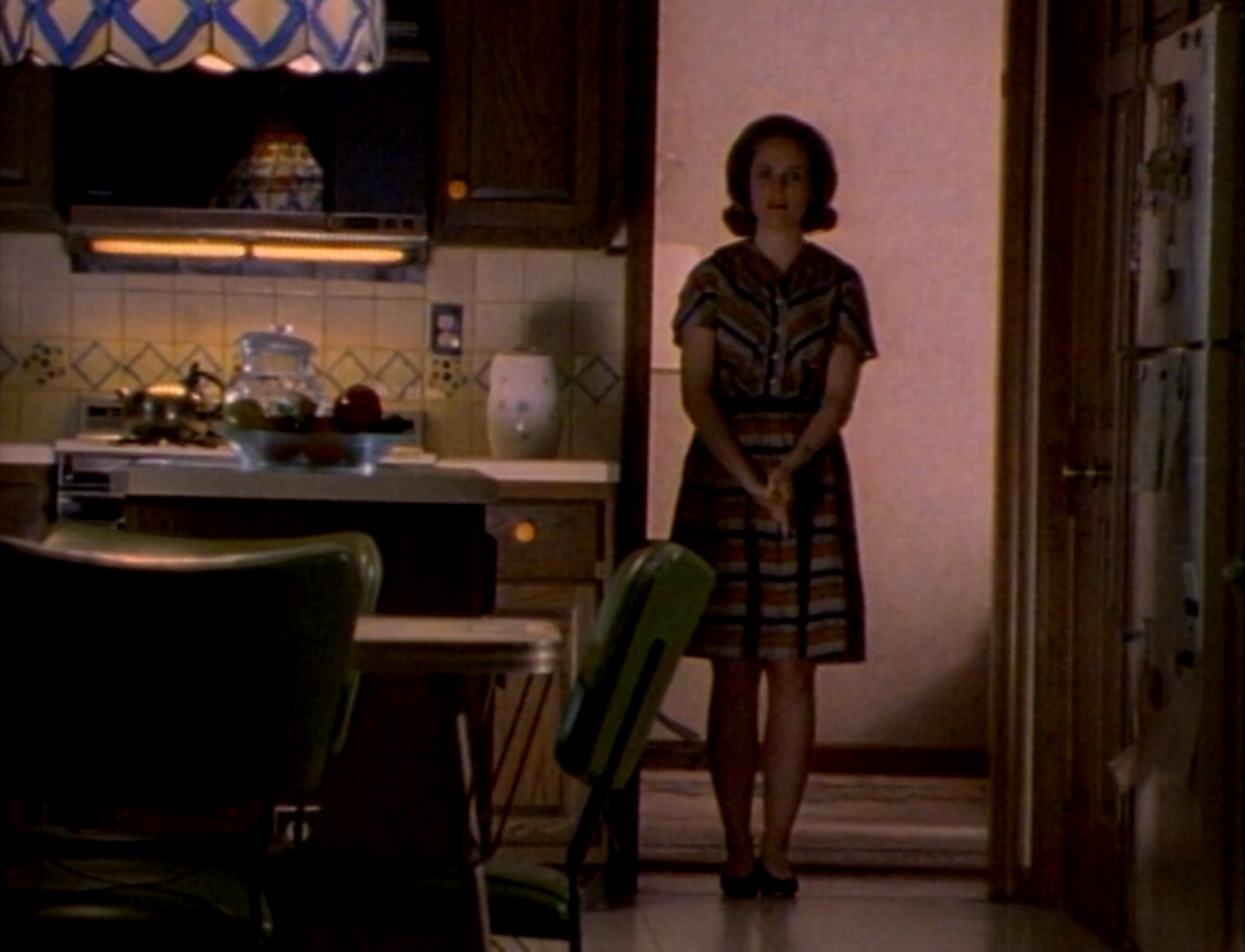
It's a simple story, as its a short film originally produced for public television, but it's very rich. Steven is a six year-old boy obsessed with Dottie of the Dottie Frank Show, a fictitious stand-in for I Love Lucy or the Here's Lucy show. Steven becomes fixated on the image of Dottie getting spanked on her show (just like Lucille Ball did on her show), and wins a contest so he go visit the taping of the actual show. It gets pretty inventive, taking us into his dreamworld; but it's the simplest, down-to-earth moments that are the most relatable, and therefore the most effective.
Dottie is from 1994, which means it isn't an early short that pre-dates all of his features. He'd already releases Poison by this point, and it's clear from the production values this is far beyond a student film. Again produced by Christine Vachon, Dottie features several recognizable character actors, and Adam Arkin even turns up in a small part. This is a professional and fully effective film. I saw The Suicide, Haynes' first short film that was recently included on Criterion's blu-ray of Safe as an extra; and that was more of a curiosity piece, mostly just fun to see what a famous, accomplished filmmaker made as a young man. This isn't that. This is a film absolutely worth seeking out on its own merits.
Also on this disc, since you kind of want to flesh out a DVD made for a short film, is He Was Once. This is a 1989 short by a filmmaker named Mary Hestand, but it's co-produced by Haynes and Vachon, and Todd even has a secondary role in the film. This is a fun subversion of the old claymation show Davey & Goliath, where live actors mimic the look and style of the stop motion characters and subvert the bland, wholesome messages of the original show. It's not something you'd pick up watching the film on its own, but together, its really interesting to connect how both films center around almost identical spanking imagery, plus have dark, black and white, surrealistic dream sequences. But I can't help thinking I'd have gotten a bigger kick out of this if I'd grown up with Davey & Goliath, leaving me with that feeling of trying to appreciate a parody of something I've never seen.
Dottie Gets Spanked on top; He Was Once below.
Zeitgeist's 2004 TV looks alright if you go in with low expectations for a low budget television production. But Dottie was originally shot on 16mm (I'm not sure about He Was Once), so it would be great to see Criterion or another label produce a new, HD transfer. Sure 16mm wouldn't reveal a whole ton more detail, but it could look a lot more natural and attractive, I'm sure, then this transfer which appears to be taken from a videotape source. The DVD is also interlaced, so fixing that alone would be a nice boost.

For an indie company like Zeitgeist and a pair of short, obscure films, it's nice to see they included optional English subtitles as well.
A big plus of Zeitgeist's DVD is the audio commentary by Todd Haynes. It's only for Dottie (another for He Was Once would've been terrific, too), but it's excellent. Haynes is prepared with notes, including the original proposal he wrote to ITVS, and he has a lot of specific memories, both of producing the film and the original events that inspired it. He goes it alone, but he never runs out of steam or feels wanting of a moderator. Also included is a photo gallery and a fold-out insert with credits and notes by Bill Horrigan.
So if you're on your way to or from seeing Carol in theaters, I highly recommend tracking this one down, too. Dottie's a great film, and He Was Once is at least an entertaining brief watch, too. Haynes fans will absolutely appreciate his commentary, too. I know a couple foreign DVDs of Poison included Dottie as an extra, but this disc is still worth getting for the whole package. And I wouldn't hold your breath on my blu-ray restoration coming through... although if anybody from the studio is reading this, it would fit in pretty well as an special edition extra feature on Carol next year, wouldn't it?

Blood Rage At Shadow Woods, Arrow's Awesome New Release

Oh boy, I've been waiting for this one! That's partially because this is a formative horror movie I first taped off of cable as a kid and watched many times since, and I've been waiting for a high quality, special edition of it. And it's also because this has had it's release date pushed back about half a dozen times. But since they turned this into an incredibly impressive 2-disc blu-ray set (technically 3-disc set, but disc 3 is just a DVD copy of disc 1), with multiple cuts including an all new composite cut of the film, plus heaps of extras, I'd say every delay was worthwhile.
Blood Rage a.k.a. Nightmare At Shadow Woods is a cheesy but quite entertaining little slasher film from the 80s. Woody Allen's first muse, Louise Lasser, stars as the mother of two twin boys, one of whom commits a gruesome murder at a drive-in during the 1970s. The bad one blames it on the good one, and we return to our characters ten years later, on Thanksgiving no less, when the good brother escapes from his mental institution and returns home. The bad brother sees this as a great opportunity to go on a homicidal rampage, as he can blame all the killings on his brother again. And so ultimately everyone's running around this apartment complex late at night, looking for or hiding from each other.
Lasser is delightfully delirious as the mother who immediately spins completely out of control when she receives word of her son's escape, and the relatively unknown Mark Soper is surprisingly effective playing both brothers. And everyone else delivers at least competent, slasher movie-level performances. In its uncut form (which yes, is on this release), the film is surprisingly gory, with some great special effects; and it's all set to this really catchy synth soundtrack. And while this movie always had the feel of a shot-on-video cheapie back in the day, seeing it restored to its original widescreen presentation, you can appreciate that it's actually rather well-lit and professional. When I first heard news that Arrow was resurrecting this film, I was excited, but I sort of felt like I might be the only person on Earth who'd be into it. But watching the restored version, I think this film is ready to be discovered by a new audience.
Up 'till now, this film has only been available on a low budget (and not strictly legally licensed) DVD from Legacy.  But if you've got one, you can chuck it in the bin, because Arrow has just released the ultimate, definitive edition. on blu-ray and DVD. They've got the uncut Blood Rage version (with the on-screen title Slasher). They've got the censored Nightmare At Shadow Woods version, which is still worth having because it features a bunch of scenes and alterations not in the Blood Rage cut. And they've made a terrific new composite cut which brings in all the footage of both versions! In fact, let's not just glide over this, let me get into exactly what's different about each version.
Blood Rage is best known for having all the complete gore scenes. When Terry kills Lasser's boyfriend, there's a particularly gruesome shot where his head is split wide open. That's only in Blood Rage. But that's not the only difference. You know the big scene near the beginning with the goofy narration where Lasser goes to visit Todd at the institution? That's only in Blood Rage. Nightmare makes the perhaps wise decision to cut out that whole silly bit, as its the only point in the only film where there's any narration, since it's very heavy-handed and amateurish (albeit also effectively comic).
On the other hand, Nightmare does more than just cut the gore and narrated scene. For one thing, it has a whole segment where most of the film's characters meet and hang out at the swimming pool. It's not just a quick scene, it's three whole minutes with characters coming and going. And Nightmare has some extra nudity. Yeah, they trimmed it for blood, but whoever was making the edit was more than fine with the sex. In Blood Rage, there's a scene where two of the kids play a prank on two of the others by putting bloody make-up on and pretending to be dead. That's cut from Nightmare. So it cuts right from the kids in the den to one of the couples having sex on the diving board. And there's a whole, long tracking shot of their naked bodies seen on in Nightmare. This makes for a weird bit of continuity, since you have to believe the couple left the den to have sex on the diving board, then went to play tennis, and then went back to have sex on the diving board a second time. Also, since those kids never put on the make-up, they don't need the shower scene of the girl washing it off. But since Nightmare's not going to waste any nudity, they move that scene to after the pool stuff, like she's showering after having been in the pool, which kinda works.

The composite cut, of course, includes everything, from the head split to the institution to the pool scene. But they made the decision to not break the continuity of having the diving board sex scene happen two times in the film. So consequently, that one bit is only in the Nightmare At Shadow Woods cut and not in the composite. I believe the film plays better that way, but you know, if you're the "Mr. Skin" type, you should know that the Shadow Woods print does contain an extra little piece of nudity for you.
Arrow's 2015 blu-ray on top; Arrow's 2015 DVD below.
Arrow has made Blood Rage look amazing. Like, I cannot believe someone put in the expense and care to make this film look this good. It's an all new 2k scan of the original camera negative, and it's beautiful. The framing's left open to 1.78:1 16x9.  It's clear just from looking at it, though, that they only had a 35mm print for Nightmare At Shadow Woods. Look at the swimming pool shot I posted earlier; it's more contrasty, with maybe slightly crushed blacks and some damage... But most of Nightmare and the composite cut look just as good as Blood Rage because they use the negative footage everywhere they can, which is like 90+% of the film. It only switches to the slightly less impressive print footage when it's all they have. And honestly, even that's fine. You can easily spot the difference, but it's not distractingly inferior.

I'm not even bothering to take screengrabs of each cut of the film, because again, they're using the exact same transfer of the footage each time, except for the exclusive shots, which of course don't have matches. And I've included such a shot and we've look at that anyway. But I did throw in a match of the DVD version, for anyone concerned about that. Naturally it's just a more compressed, standard definition version of the same transfer. It holds up pretty well for a DVD.

The audio has been taken from the original elements, too, and turned into a nice English LPCM 2.0 stereo track. But there is a healthy taste of old school background hiss throughout the whole thing. Arrow has also included optional English HOH subtitles.
And extras, oh yes, Arrow delivers once again! The director (and one of the film's new owners) provide an audio commentary, which uh, I'll come back to. They managed to get Louise Lasser for an on-camera interview. And I was worried at first that she was just going to talk about her more mainstream career and be like "I don't really remember" when it came to Blood Rage, but no, she remembered it quite well and had a lot of interesting things to say about it. Special effects artist Ed French has an in-depth interview, Mark Soper has an enthusiastic one, producer Marianne Kanter has a funny one... even Ted Raimi has one for his brief, silent cameo in the film's opening credits. What else? Let's see, there's a featurette visiting all of the film's old Florida locations. There's like a half hour's worth of outtakes, though they don't have audio, so you might just want to casually fast forward through those... Still, it's cool that they're here. There's also a run of the opening credits taken from the VHS tape (though they actually aren't any different except for the title card) and a photo gallery. There's also a nice booklet with notes by Joseph A. Ziemba, and the packaging includes reversible artwork and a cool, slightly embossed slip cover. It's a terrific package.
So okay, about that commentary. I've read a couple of reviews saying it's quite good, which makes me wonder if they actually listened to it before writing the review or if they just "needle dropped" it. I won't point to any specific links, but this commentary is a bit of a train wreck. The entire time, I couldn't decide if the director was being deliberately antagonistic - like maybe he was contractually obligated to be there and was doing it under protest or something. Because he volunteers nothing. The moderator asks him if he remembers working with Lasser and he says "yes." And that's it. Most of the commentary is complete silence. And the moderator deserves some blame for that, too, because he never follows up or presses him. He just accepts single word non-answers and then lapses into long periods of complete silence himself.

And when the director does talk, it's clearly been edited in. Like he did a separate interview, and the Arrow people dropped in clips from that whenever they were silent for too long. The producer wasn't there for the filming, so he has very little to add, though there is an interesting portion where he talks about how they had to sue the people releasing Blood Rage illegally on DVD before Arrow came along. Overall, it's worth listening to for that and the little snatches of talking... the additional interview talk is probably about 10-15 minutes worth, and the director does manage to say a few short things with the moderator prompting him. Ultimately, I'm glad the commentary is included; it's better to have it than not. But come, on fellow reviewers, it's not good at all, it's a huge mess Arrow had to really struggle to salvage. And even after all of that, it's an awful lot of awkward, dead air that's uncomfortable to sit through.
But don't let my criticisms fool you, I am in love with this release. Arrow has gone above and beyond expectations, giving a very minor film absolutely top tier treatment. I think the new composite cut they created is the best way to watch this film, it's the new definitive cut in my book. Some of the extras are great, and I even enjoyed the troubled ones. And the visual and audio presentation has even upped my appreciate for this film, which was already probably higher than almost anybody else's. Collector's will love Arrow's consistently strong packaging... I believe this version is a limited edition, and it will later be released without the second disc and alternate versions of the film. Most of the extras are on disc 1, so casual viewers will get that and the Blood Rage edit. But if you're going to get this film, I sincerely suggest getting this set now for the composite cut. I mean, the film ain't exactly Shakespeare, so "not for everybody" strongly applies here; but if you dig this kind of movie, then this release gets my highest recommendation.

Mistress America On Blu... It Does Exist (DVD/ Blu-ray Comparison)

Noah Baumbach's latest, Mistress America, has finally... dribbled out onto blu-ray. It had a release date of December 1st, but Amazon didn't ship its copies out until days after (possibly due to some minor cold war between between Amazon and Fox). It's barely at any stores. Even bestbuy.com only has the soundtrack. That's right, Best Buy has the vinyl LP, but not the blu-ray in 2015. And where it is being sold, the price is exorbitant compared to comparable new releases, and surprisingly, there's no DVD counterpart. But still, it exists. I got my copy, so you guys can get it, too. Let's just enjoy.

Update 5/9/17: No DVD, did I say?  Turns out there's a "rental exclusive" version, anyway.  So I hunted one down, because I like a challenge.  So now you can enjoy a DVD/ Blu-ray comparison.  Yay.  Oh, and now in 2017, bestbuy.com does have the blu.  I guess they read this site.  šŸ˜‰
Mistress America is pretty great. It might be a little light on surprises for anyone familiar with Baumbach's last couple films (you could easily describe MA as Frances Ha meets Greenberg, with the look of While We're Young), but it's hard to complain about having your expectations happily met. Lola Kirke is a young college freshman who moves to the city and hesitantly contacts her new big sister in-law, Greta Gerwig, who once again co-wrote the screenplay. Gerwig's been living in a commercial space in Times Square, leading a sort of Breakfast At Tiffany's-style fantasy life, who's poured all of her ambitions into opening a restaurant/ community center where you can also get your hair cut. And when her backers pull out, the pair drive off to Connecticut to squeeze a business loan out of her old "arch nemesis."
There's a bit of a zany 80's comedy feel to the proceedings, but it still comes from an earnest well-shaded base. It's like a drama dressed up as a comedy. Of course, Baumbach can be relied upon to bring the wit and cleverness, and many of his recent themes are being revisited, particularly of aging without having met your dreams. The characters might seem fun yet obvious at first, but membranes are sporadically peeled back to reveal bigger characters underneath. Gerwig first appears to be all quirkiness and charm, until she's confronted by an old classmate about the emotional scars her high school bullying left her; and the tables are turned again when Gerwig shames her for carrying an irrational, childhood grudge. When Kirke describes how Gerwig's methods of coping in the world were collapsing, her old friends quietly deserted her as they could smell the failure on her, her youth had died and she was now carrying around its decaying corpse, I thought okay, this film has come to do more than just lightly entertain.
Fox 2015 "Rental Exclusive" DVD on top; Fox 2015 blu-ray below.
Of course Mistress looks great here. A brand new release, shot digitally and put on an HD disc, there's not a lot to get wrong, and thankfully nothing was. The film's slightly letterboxed to 1.85:1 on both versions, and apart from looking slightly softer and the usual SD compression distinctions, the DVD and blu are the same.  The fact that there's no film grain helps bring the two closer together, but don't get me wrong, fine detail on the DVD is blurred away, but clear on the dual-layered blu.  The blu features a DTS-HD 5.1 mix, plus 5.1 mixes for French, Spanish and English Descriptive audio.  There are also optional French, Spanish and English HoH subs. It also featured a new anti-piracy update thingy, though, that made me update two of the players I tested it on before it would play. So look forward to that hassle. But the movie's presented in top form once you get to it.
Extras, on the other hand, are disappointing. We get three promotional featurettes, two of which are less than 2 minutes(!) long (and yes, the rental exclusive DVD has them, too). The third is about four minutes, and they all feature more clips from the film than anything else. They do include teensy tiny soundbites of interviews with Baumbach, Gerwig and Kirke, but they don't do anything more than briefly describe the film you've just seen. Apart from that, you get the trailer, a photo gallery, some bonus trailers which play on start-up, and the disc comes in a slipcover. It's pretty underwhelming to see half of Baumbach's films get celebrated by first class Criterion Collection discs, while the other half gets this generic, no frills treatment. Especially when, if you search for "Mistress America" on youtube, there's tons of longer promotional interviews and Q&As with Baumbach, Gerwig and Kirke. Surely at least one of those could've been slapped onto this disc?
A release like this would be underwhelming at a usual price. At the one they're asking, it's particularly frustrating. But at the end of the day, it's a great movie and it's presented perfectly well. So as long as you're not expecting anything fancy, fans should be more than happy with this disc. I mean, look at the state Highball and Mr. Jealousy are in on home video. Take this blu-ray and run.

The Authentic Invisible Man

So I guess Universal wants to reboot their classic monster line-up again, whatever that's going to entail. Sure, fine, good luck to all that. But if you want to see a really great, effective revitalization of The Invisible Man, it already exists by way of this totally underrated BBC adaptation from 1984. It's actually a made for British television series in six episodes, and by far the most faithful adaptation of HG Wells' original novel. And there's a fine DVD of it over in the UK.

There's actually not that many versions of The Invisible Man out there. Yeah, there's plenty of films and TV shows about killer invisible people that are clearly flowing in the original's footsteps, like Hollow Man, The Amazing Transparent Man, The Invisible Maniac, etc. But ones that actually, sincerely tell the story from the original novel? There's the old 1933 James Whale film, and there's this. And this is a full BBC mini-series that really takes the opportunity to present the entire book, as opposed to the standard "hit the highlights" version most movies make out of books.
And it's really well made. The acting is great all around. It still hangs onto the humor in the novel and original film, but also keeps the darker subtext. One big thing the old film changed was in that, the invisibility formula turned the man insane, like Dr Jeckyl and Mr Hyde. But this version sticks with the original novel's approach, where it's a man who only makes himself invisible, and the only "evilness" comes out of real human foibles boosted by the power he's given over others while simultaneously being isolated from them. It's more of a dramatically compelling tale that becomes a valuable exploration of our own nature, as opposed to just a fun "what if?"

Yet it's actually not so much longer than the original film. Universal's was a tight 71 minutes, and this one, when you take out all the repeat opening and closing credits of each episode, is maybe two and a half hours? So it's less of a mini-series, in terms of length, than just a longer, more in depth movie. Of course, the Universal version added a bunch of extraneous nonsense which dumbed things down somewhat. The invisible man in this one has a doting fiance with nothing but hammy scenes; and her father and his friend are scientists who are figuring science things out and delivering exposition like crazy. So if you figure the movie added all of that, it had to leave out even more of Wells' stronger material.
I'm not saying the 1933 version is all junk, by the way. It's a lot more faithful than most invisible man films that only share the basic "a scientist turns himself invisible and kills somebody" premise. Both films have all the major set-pieces of the mysterious bandaged scientist who rents a room at a small inn and makes everyone suspicious, and both eventually have him meet his former colleague to plan an ambitious abuse of his powers. The tone of the original actually holds up surprisingly well, with a highly entertaining mania to the villain, plenty of fun invisibility gags that were of course innovative for their time but are also still appealing today, strong performances including a lot nice touches with minor characters, and a cool, bleak ending that diverts pretty far from the book, but worked well in the movie. It's just a different, simpler version of the story that turns it into a more digestible, Hollywood-ized light entertainment. It works great on its own terms; it's just not a serious adaptation of the novel like this BBC version.
And for being a television production, the effects are all pretty well done. They use a variety of techniques to put across the various invisibility issues, and they're actually pretty impressive. I remember John Carpenter's Memoirs of an Invisible Man getting a lot of attention for showing the food going into the man's mouth and down his throat as he ate... but they did it here first, and it works perfectly well. This production more dated by being a full-screen shot on video production than anything else. The costumes and locations (this is also the first telling of Wells' story that keeps it in the 1800s as opposed to modernizing it) are all great; there's lots of slick camera moves. And the final chase is actually quite thrilling for what seems so superficially modest.
So, the picture is 4:3 and looks like video because that's what it is. There's no HD transfer of a 35mm negative to be made here. But this is a stable, clear presentation that looks as good as this show surely ever has or could. There's no interlacing, video noise, softening, color bleeding or any of the other issues that often plague older television series on DVD. BBC has done a thoroughly professional job getting this series onto disc; and they've even added optional English HDH subtitles.

And it's not entirely barebones. Chiefly, it has one brief extra: a 6-7 minute excerpt from the BBC television show Did You See? where several guests discuss the latest episodes of The Invisible Man mid-season. It's not actually cast or crew from this series, but other personalities, and their observations are sometimes a little on the banal side, but I'm glad they included it. It's definitely a time capsule. And that's all that's on the disc, but there's also a rather thorough, 20-page booklet included, which talks in-depth about everything from past attempts to film The Invisible Man, how this show got its funding, details of the original script, descriptions of the production, and how it was eventually received by the public when it aired in the UK back in 1984. Someone really put a lot of time into it.
This isn't a new release; it's from 2005. But I don't think you're going to see any company take another pass at this. And that's fine, because you can't realistically ask for more than this. It's a good disc of a great show that fans of smart horror should really check out. There's no way Universal's going to cook up something this good with the character in the next couple years.

Gates of Vernon, Florida: Two HD Upgrades by Criterion

Errol Morris does great audio commentaries, and some of his earlier films especially benefit from a little explanation and knowledge of their back story (especially Vernon, Florida). So it was always a shame that his older films only had barebones DVD releases. That's why I was so excited when Criterion recently began reissuing his classic documentaries as special edition blu-rays. First they tackled A Brief History of Time, and then they simultaneously released all three films from MGM's Errol Morris DVD Collection. I've already taken a look at The Thin Blue Line, and today I'm going to wrap that up with Morris' first two films: Gates of Heaven and Vernon, Florida, packaged together on Criterion's Two Films By Errol Morris blu-ray.
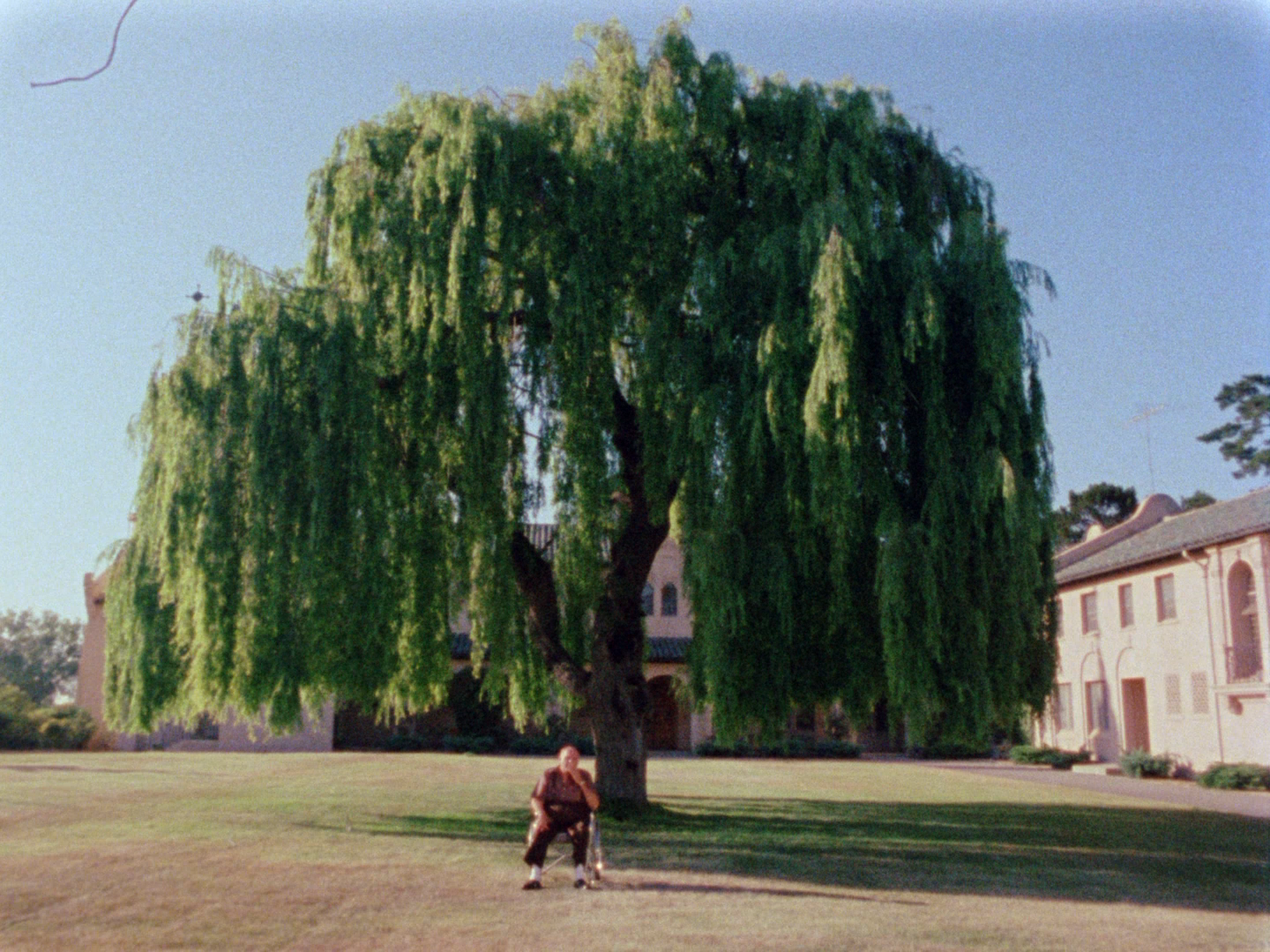
Gates of Heaven is just one of those perfectly absorbing documentaries where everything great all just happens to come out on camera. It's alternately funny, sad, relatable and fascinating, peeking into the otherwise unexamined world of pet cemeteries. Dating all the way back to 1978, it's also a become a bit of a period piece; but of course what's so effective about the film is how the humanity never changes. There's the two brothers who run one of the cemeteries with their father: one a frustrated drop-out musician who takes his giant speakers out to echo his jam sessions throughout the valley, the other a motivated go-getter who conducts his interview surrounded by all his sports trophies. People come to talk about life, death and the loss of their little loved ones, we witness the struggles of a small "mom and pop" pet cemetery versus bigger business, and we even have an eye-opening chat with the head of a rendering plant. It's just one of those movies you wish would never end.
Vernon, Florida is an even stranger film. I didn't know it when I first saw it decades ago, but it's essentially what came out of a film that couldn't be filmed. Morris originally went down South to investigate one of the country's biggest cases of insurance fraud. But when no one would talk about it, we wound up instead with a portrait of an eccentric little dot on the map. There's barely any structure as we encounter one local, then another, then cut back to the first. We hear their hunting stories, meet their animals, and ultimately sink into their personal philosophies of death, nature and the journey to find meaning in their lives. Sure, it feels a bit culled together from loose ends, but that almost makes it even more engrossing: the strange, organic film that grew on the outer fringes of a more traditional movie.
MGM 2005 DVD on top; Criterion 2015 blu-ray below.
MGM's 2005 DVD sort of said, "hey, what do you want for an old, low budget full frame documentary?" It was alright if you just wanted to see the film, no real flaws or issues. But Criterion, of course, gives it much better treatment with their 2015 blu. They've given it a new 2k scan, supervised by Errol Morris, from a 35mm color reversal internegative. It's still 1.33:1, because that's how the film was shot and meant to be shown; but they've given it back its natural, filmic look, compared to MGM's softer videotape-like image. Colors don't bleed like they do on the DVD, and the natural grain tells us we're seeing all the detail there is to be seen. The booklet with this blu talks about the "thousands of instances of dirt, debris, scratches, splices, warps, jitter and flicker" they manually removed, but as you can see in the second set of shots (top left corner), they missed a couple conspicuous ones that weren't even on the MGM disc. There's still some flickering in certain scenes, too. Some of the color timing decisions might be a bit questionable, too (what color is that guy's shirt in the first set of shots, really?). But these are minor instances within a rewarding restoration that happily replaces the old fuzzy transfer.
MGM 2005 DVD on top; Criterion 2015 blu-ray below.
Vernon, Florida shows an even bolder, more distinct improvement. Part of that is because MGM didn't even bother to encode the widescreen (1.66:1) film anamorphically - yuck! That's pretty bad in 2005. As you can see, it floats in a sea of negative space on the DVD, whereas Criterion preserves the 1.66 framing by pillar-boxing their image. You can also see they've adjust want's in the frame a bit, too; including more image on the bottom and both sides, but losing some a long the top. Again, Morris supervised these, so I'll just assume that's more correct.

So anyway, the other aspect of the improvement is that Vernon just seems to have been shot with a naturally stronger image (better camera?), resulting in a sharper, clearer picture when bumped up with another 2k scan. There just seems to be more detail to restore, making everything look even better. And like Gates of Heaven, the MGM DVD has a sort of VHS quality to its colors. Look at the American flag on the officer's shoulder or the bars on his back window in the second set of shots. There's all this green and purple discoloration popping up all over the place that thankfully has been eradicated in Criterion's much more naturalistic blu. Even at first glance, if you don't even bother to view these screenshots full size, the Criterion grabs just scream higher quality.

MGM's mono audio on both discs was always clear and fine, but Criterion has given both film's mono tracks a nice little HD boost. Both MGM's DVDs and Criterion has optional English SDH subtitles, with MGM also offering French and Spanish subs.
Criterion really comes through again in the extras. MGM had nothin'. Just some bonus trailers, not even the trailers for the films themselves. And while Criterion's blu isn't loaded with a ton of stuff, what it has is great and may be reason enough for people to double-dip, even if they're not the type to care much about video quality. Primarily, each film features a 15-20 minute on-camera interview with Morris, who tells you everything you wanted to know, and some fun anecdotes you didn't know you wanted to know, about each film. These are great and just what the old DVDs are lacking.

They've also included Les Blanc's short film, Werner Herzog Eats His Shoe. It's been included as an extra several Herzog films already, but it really belongs with Gates, since the story is that Herzog told Morris if he ever finished his first film (which was Gates), he'd eat his shoe. And this is him eating that shoe in honor of Gates of Heaven.

And finally, there's a very brief (like 1 minute long) clip of Herzog at a film festival saying a few words about Gates. Just a very minor, extra little thing, but hey, the more the merrier. Criterion's blu also has a nice, fold-out booklet with a very long essay by New York reporter Eric Hynes.
So this is a very welcome pair of upgrades, or just a great place to start for someone stepping into the world of Errol Morris. And frankly, at least in terms of extras, it's what MGM should've given us in the first place. Now, hopefully 2016 will give us Criterion editions of Mr. Death and Fast, Cheap and Out of Control and we can really feel caught up in the home video filmography of Errol Morris.